Water Weight or a Weight-Loss Plateau? How to Read the Trend
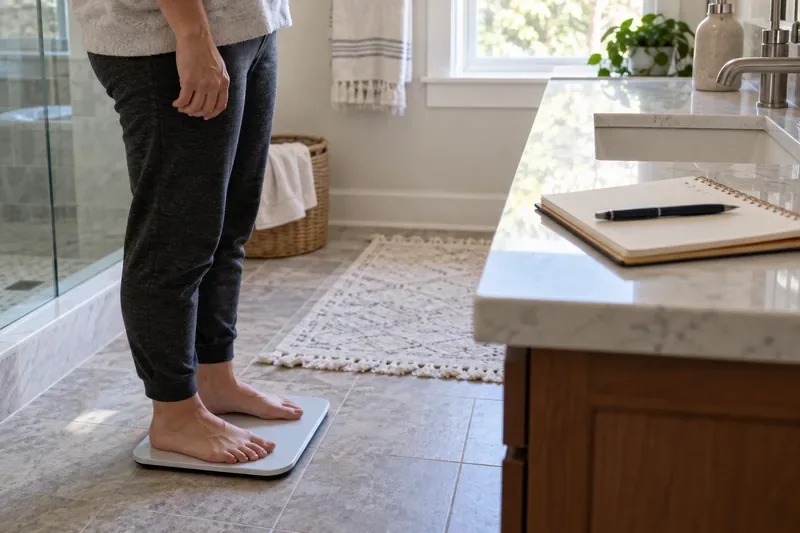
Learn how everyday water and digestion shifts differ from a sustained weight-loss plateau, how to track trends safely, and when to call a clinician.
You have been following a weight-loss plan, but the scale jumps up after a salty meal, dips a few days later, and then seems stuck. That pattern can be frustrating. A single weigh-in cannot tell you whether body fat is changing: scale weight also includes water, food and drink in your digestive tract, waste, and other short-term shifts. A likely plateau is a longer pattern in which the average trend stops moving down. No one weigh-in, however, can diagnose the reason.
Current guidance from the CDC, NIH’s National Institute of Diabetes and Digestive and Kidney Diseases (NIDDK), and the National Heart, Lung, and Blood Institute (NHLBI) emphasizes realistic goals, tracking progress, and adjusting plans with health professionals when needed. The core advice remains practical: look at a consistent trend over time, not isolated daily changes. This article reviews official guidance available on September 30, 2026.
Body weight is not a direct measurement of body fat. A scale reading can rise or fall over a short period because of fluid balance, the timing and size of meals, bowel contents, hydration, and the conditions of the weigh-in. A higher-sodium meal, a change in carbohydrate intake, a menstrual-cycle-related fluid shift, travel, constipation, or a new demanding workout may coincide with temporary scale movement. These possibilities can explain ordinary fluctuations, but they do not prove what caused one person’s reading.
For example, a higher number the morning after a restaurant meal may reflect food and fluid still being processed, alongside a temporary change in water balance. It does not show, by itself, that the person gained that amount of body fat overnight. Likewise, a sudden lower number after sweating or illness may reflect fluid loss rather than lasting fat loss. Avoid trying to “correct” a reading by dehydrating yourself, skipping meals, using laxatives, or taking water pills.
Fluid retention is a separate concern when it is persistent, marked, or accompanied by swelling or other symptoms. MedlinePlus notes that swelling can occur for many reasons, including some medicines and health conditions; do not stop a medicine on your own to test whether it is involved.
Start by making weigh-ins comparable. Use the same reliable scale on a hard, level surface. Weigh at a consistent time—many people choose the morning after using the bathroom and before eating or drinking—with similar clothing. Record the date and number without treating any one reading as a verdict.
There is more than one reasonable tracking schedule. NHLBI says daily weighing can help many people monitor weight; CDC guidance for maintaining weight loss includes recording weight weekly. Daily weighing may show normal noise clearly, so it works best for someone who can focus on the longer trend. If daily numbers raise anxiety or encourage restrictive behavior, discuss a less frequent schedule with a clinician.
If you weigh daily, compare a seven-day average with the next week’s average instead of reacting to each number. If you weigh weekly, keep the day and conditions similar. Watch the pattern across several weeks. A few days or even a week with no change is not enough to establish that progress has stopped. A possible plateau is more plausible when comparable weekly readings or averages remain broadly level over a sustained stretch, despite a plan you can realistically follow. There is no single number of days that distinguishes every person’s water shifts from a true plateau.
Other measures can provide context, but they are imperfect too. Clothing fit, waist measurement taken the same way, strength, stamina, blood pressure, and how well a health plan is working may matter alongside scale weight. Body measurements can also vary with technique, meals, and fluid changes, so avoid overinterpreting a single result.
As weight decreases, the body generally needs less energy to maintain its new, lower weight. NIDDK explains that metabolism slows during weight loss and that hormonal and other factors can make maintenance more difficult. Also, routines can drift: portions may grow, snacks or drinks may go uncounted, activity may fall, sleep may change, or a schedule may become harder to manage. This is not a character flaw. It is a reason to review the plan and its fit with real life.
Medicines, medical conditions, stress, age, hormones, and environment can also affect weight management, according to CDC guidance. If weight changes after starting or changing a medicine, or if there are other new symptoms, ask the prescriber or another qualified clinician to review the timing and options. Do not stop prescribed treatment without medical advice.
Contact a health professional if weight is changing rapidly without an obvious explanation, if weight gain occurs with new or worsening swelling, or if a plateau is affecting your health or making the plan difficult to sustain. A clinician can decide whether the history, examination, medicines, or selected tests warrant review. The scale alone cannot establish a medical cause.
Seek emergency help for shortness of breath or chest pain, especially when these occur with new swelling or rapid weight gain. MedlinePlus lists these as emergency warning signs. New one-sided leg swelling, redness or warmth, fever, or worsening swelling also calls for prompt medical advice. Unintentional ongoing weight loss deserves evaluation, even if it seems unrelated to a weight-loss plan.
If the trend is flat but you feel well, the next step is usually a calm review of the record and your plan—not a drastic response to one reading. If the pattern persists, or you have symptoms or medical concerns, bring the log to a clinician. The useful outcome is a safe plan that fits your health and life, whether or not the scale moves every week.
This article is educational and does not diagnose the cause of weight changes or replace personalized medical care.
Learn how everyday water and digestion shifts differ from a sustained weight-loss plateau, how to track trends safely, and when to call a clinician.
What is Keto Cake? What are the benefits of Keto cakes? Find out with nutritionist Dao Phuong Anh through the following article