Small Health Habits That Are Easier to Keep When Motivation Is Low
When motivation is low, the easiest health habit to maintain is usually the one that asks the least of you on a difficult day. Think a short walk, adding one ready-to-eat food to a meal, or making one small change to your bedtime routine—not rebuilding your whole schedule. These are starting points, not a test of willpower or a substitute for medical care.
Low motivation can show up during a busy week, after poor sleep, when responsibilities pile up, or while coping with pain, illness, grief, or stress. It can also be part of a health or mental health concern. The feeling alone does not explain its cause. Choose one manageable action, notice whether it helps, and seek support if symptoms persist, worsen, or interfere with daily life.
What makes a small habit easier to keep?
Make the action specific, brief, and easy to begin. A cue is an existing event that reminds you to act, such as finishing breakfast or arriving home. Pairing a new action with a dependable cue can reduce the number of decisions you need to make. For example: “After I put my lunch in the fridge, I’ll take a five-minute walk.” The five minutes are an example of a low-bar starting point, not a prescribed dose.
Before choosing, ask: Can I do this on an ordinary low-energy day? Is the first step obvious? Can I make it easier by setting something out or keeping it nearby? If the answer is no, shrink the action or remove a barrier. Choose a version that fits your body, schedule, finances, culture, and living situation.
Prepare once, then try one habit
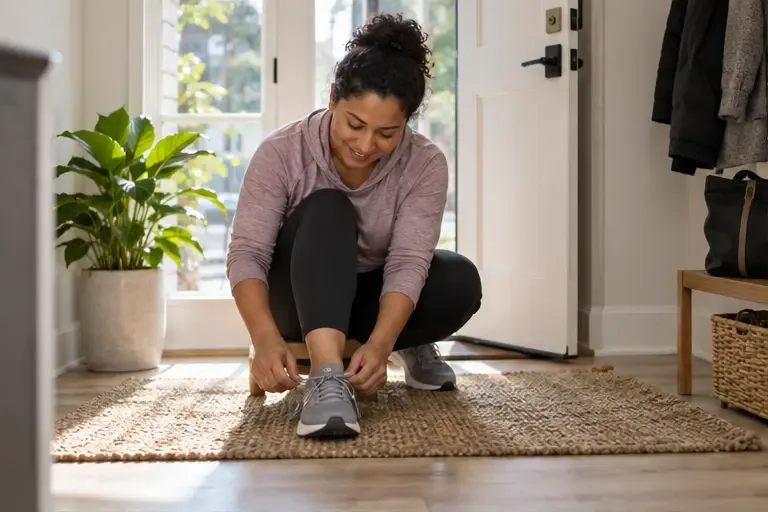
Walking shoes are placed by the door, making a brief walk easier to start when it fits the person’s day.
Pick just one area for the next week. Put needed items where you will see them, decide when the action can happen, and choose a small version for harder days. You might put comfortable shoes by the door, keep a piece of fruit where you pack lunch, or move your phone charger away from the bed. Preparation should make the action simpler; it should not become another demanding project.
Small habits to try when energy is limited
1. Add a short bout of movement
Try standing and stretching during one break, walking to the end of the block, or moving gently for a few minutes after a routine task. Choose a pace and activity that feel safe for you. If walking is uncomfortable or inaccessible, consider another movement that works for your body, such as seated movement, or ask a health professional about suitable options.
A relaxed neighborhood walk is one example of a short movement break; the route and pace can be adapted.
The CDC says adults benefit from any amount of moderate- or vigorous-intensity activity and can spread activity into smaller chunks. Its general adult target is at least 150 minutes of moderate-intensity activity per week plus muscle-strengthening activity on two days; that is a longer-term public health target, not a reason to dismiss a small start. See the CDC’s current adult physical activity guidance. If you have a condition, recent injury, significant pain, or have been told to limit activity, follow your clinician’s advice before increasing movement.
2. Add something nourishing to a meal you already eat
Instead of planning a complete menu change, try adding one convenient item: an apple, a handful of baby carrots, frozen vegetables warmed with dinner, or another food that suits your preferences and needs. Fresh, frozen, and canned foods may all be practical choices; check labels if sodium, sugar, allergies, or another medical dietary restriction matters to you. The aim is to make one meal a little more nourishing, not to label foods as “good” or “bad.”
Adding a ready-to-eat fruit or vegetable to a familiar lunch can be a small, flexible food habit.
3. Make one sleep-supporting change
Choose a change you can repeat, such as charging your phone away from the bed, dimming lights before bedtime, or keeping wake-up time reasonably consistent when your schedule allows. The CDC lists a quiet, relaxing sleep space, turning off electronic devices at least 30 minutes before bed, and avoiding afternoon or evening caffeine among habits that may support sleep. Adults ages 18–60 are generally advised to get at least seven hours of sleep, though needs vary. A bedtime routine cannot resolve every cause of poor sleep. Read the CDC’s sleep recommendations.
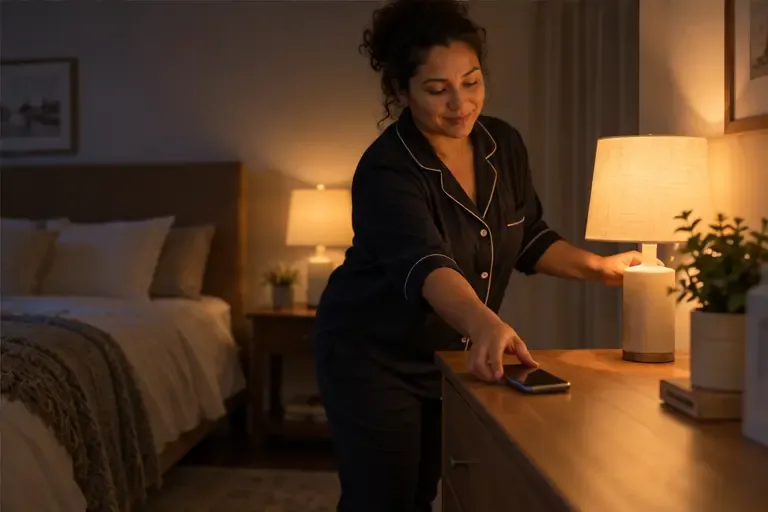
Moving a phone away from the bed is one possible cue for a calmer pre-sleep routine.
4. Make an existing health task easier
If a task is already part of your care, attach it to a cue: put a refill reminder on the calendar, keep appointment details in one place, or set out items you need for a clinician-approved routine. Take medicines only as prescribed; do not change a dose or stop a medicine to make a routine simpler without speaking with the prescriber or pharmacist. If managing treatment feels difficult, tell your care team—simplifying the plan together may be safer than trying to push through alone.
A simple way to begin today
Choose one area that would make daily life feel a little easier.
Write one action that takes only a few minutes or removes one barrier.
Attach it to an event that already happens.
Prepare what you need in advance.
After a week, ask whether it was realistic. Keep it, adjust it, or choose another action.
Use a check mark, a note, or no tracking at all—whichever feels helpful rather than burdensome. Missing a day is information, not failure. If the plan repeatedly falls apart, make the first step smaller or choose a different cue. A habit does not need to expand every week to count as useful.
What to avoid—and when to get help
Avoid starting with several strict goals, treating a missed day as proof you cannot change, or using exercise, food restriction, supplements, or sleep products to punish or “fix” yourself. Be cautious of advice promising that one small routine will cure fatigue, low mood, or another symptom. The cause may be ordinary and temporary, but it may also need evaluation.
Consider contacting a health professional if low motivation comes with persistent or worsening distress, difficulty completing usual activities, notable changes in sleep or appetite, loss of interest, or other symptoms that last around two weeks or more. That time frame is a reason to seek an assessment, not a way to diagnose yourself. The National Institute of Mental Health’s guidance on caring for mental health describes when professional help may be useful. Also seek medical advice for ongoing sleep problems, unexplained fatigue, or physical symptoms that concern you.
If you may harm yourself or someone else, or cannot stay safe, get immediate help. In the United States, call or text 988 for the Suicide & Crisis Lifeline; for a life-threatening emergency, call 911 or go to an emergency department. The NIMH help page lists crisis options. Outside the United States, contact your local emergency number or crisis service.
The most maintainable habit is personal: small enough to begin, useful to you, and flexible enough to survive an imperfect week. Start with one action. If motivation stays low or daily functioning becomes harder, pair self-care with support from a qualified professional.