Home
» Sleep disorders
»
Clocks Change in November: How to Reset Your Sleep Routine Without Self-Medicating
Clocks Change in November: How to Reset Your Sleep Routine Without Self-Medicating
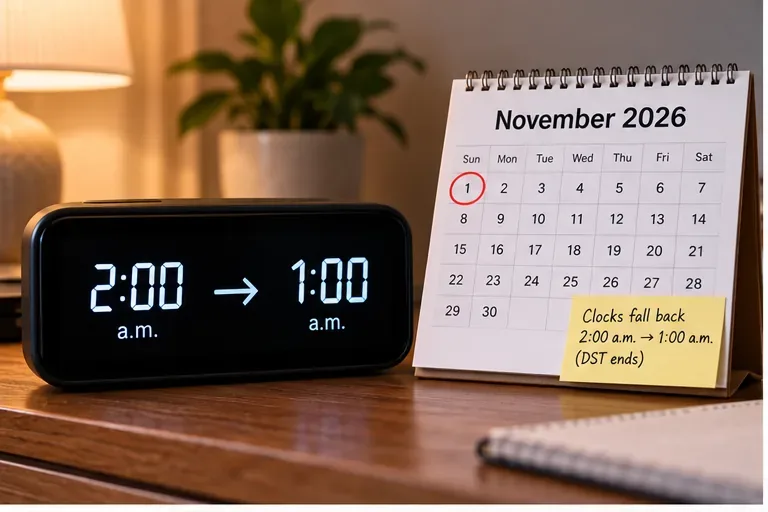
For most of the United States, daylight saving time ends on Sunday, November 1, 2026. Under the current federal schedule, the clock moves back at 2:00 a.m. local daylight time and becomes 1:00 a.m. standard time. That means the night is one clock hour longer, but it does not guarantee that your body will immediately feel rested or ready for the new schedule. The National Institute of Standards and Technology explains the U.S. rule and also notes that Hawaii, most of Arizona, and several U.S. territories do not observe the seasonal change. Before adjusting your sleep routine, first confirm that the clock change actually applies where you live. See the NIST local time and daylight saving time FAQ.
This guide focuses on a beginner-friendly, non-medication approach. “Circadian rhythm” means the roughly 24-hour internal timing system that helps regulate sleep and wakefulness. Light exposure, meal timing, activity, and a regular wake time can all act as cues to that system. The goal is not to force sleep with alcohol, supplements, or over-the-counter sedating products, but to make the schedule change easier to absorb with predictable habits.
Step 1: Confirm the date, your location, and your target wake time
Start with the calendar rather than the medicine cabinet. In 2026, the first Sunday in November is November 1. If your location observes daylight saving time, the clock falls back one hour at 2:00 a.m. local time. Phones, computers, and many connected clocks usually update automatically, but an older clock or a device with automatic time disabled may not.
On November 1, 2026, locations in the United States that observe daylight saving time return to standard time at 2:00 a.m. local time.
Next, choose the wake time you need after the change. For example, if work starts at 8:30 a.m. and you normally get up at 6:45 a.m., keep 6:45 a.m. as your anchor rather than treating the extra clock hour as a reason to sleep several hours later. A stable wake time helps keep the rest of the day—meals, daylight exposure, exercise, and bedtime—from drifting.
The National Heart, Lung, and Blood Institute recommends going to bed and waking at consistent times and keeping weekend and weekday schedules reasonably close. Its broader sleep guidance also emphasizes getting enough time for sleep rather than trying to compensate with stimulants or sedatives. See the NHLBI healthy sleep habits guidance.
A quick check before you change anything
Does your state or territory observe daylight saving time?
Is automatic date and time enabled on your phone and alarm clock?
What wake time do you actually need on Monday, November 2?
Are you already short on sleep? If so, prioritize adequate sleep opportunity rather than staying up later because the clock “gives” you an extra hour.
Step 2: Use morning light and a steady wake time as your main reset signals
Light is one of the strongest environmental signals for the circadian system. After the fall clock change, sunrise and sunset occur earlier by the clock. For someone who tends to feel groggy in the morning, getting outdoor light after waking can help reinforce the new daytime schedule. You do not need a complicated light-therapy plan for an ordinary seasonal transition: opening the curtains, going outside for a morning walk, or spending time outdoors after breakfast are practical starting points.
Morning daylight, paired with a consistent wake time, gives your body a clear daytime cue after the clocks fall back.
Keep this simple for the first several days after the switch. Wake at your planned time, get daylight when practical, eat breakfast or your first meal on a regular schedule, and stay physically active during the day. NHLBI advises spending time outside when possible and being physically active as part of healthy sleep habits.
The tradeoff is that a strict wake time can feel less comfortable on the first morning if you stayed up late the night before. Sleeping very late may feel better immediately, but it can shift your bedtime later and make Monday morning harder. If you are unusually tired, a brief earlier-afternoon nap may be less disruptive than a long late-day nap. NHLBI notes that people who have trouble falling asleep at night may benefit from limiting naps or taking them earlier in the afternoon.
Step 3: Make the hour before bed boring, dim, and predictable
A bedtime routine works best when it reduces stimulation rather than adding another task list. About an hour before your planned bedtime, lower the lights, finish demanding work, and move toward quieter activities. Reading, taking a warm bath, listening to calm audio, or doing a familiar relaxation exercise can all fit this role. The exact activity matters less than consistency.
A low-stimulation wind-down period can make the new bedtime easier to follow without relying on alcohol, antihistamines, or sleep supplements.
NHLBI advises using the hour before bed for quiet time, avoiding bright artificial light, and keeping the bedroom cool, quiet, and dark. It also recommends avoiding large meals close to bedtime and avoiding nicotine, caffeine, and alcohol near bedtime. Alcohol can make some people feel sleepy at first, but it can contribute to lighter, more disrupted sleep later in the night.
This is where “without self-medicating” matters. A clock change is a scheduling event, not automatically a reason to start a sleep product. Melatonin is a hormone involved in circadian timing, but a supplement is not interchangeable with good sleep timing. The National Center for Complementary and Integrative Health notes that evidence does not support routinely recommending melatonin for chronic insomnia, long-term safety information is limited, and supplements can interact with medicines. It also notes that U.S. melatonin supplements are regulated as dietary supplements rather than as prescription drugs. See the NCCIH melatonin fact sheet.
Over-the-counter sleep products deserve similar caution. Many contain sedating antihistamines. MedlinePlus notes that these products can cause next-day grogginess and may become less helpful as the body gets used to them; older adults can face additional concerns. If you think you need a sleep medicine, ask a clinician or pharmacist rather than adding one simply because the clocks changed. See MedlinePlus guidance on medicines for sleep.
Step 4: Judge the routine by how you function over several days, not by one night
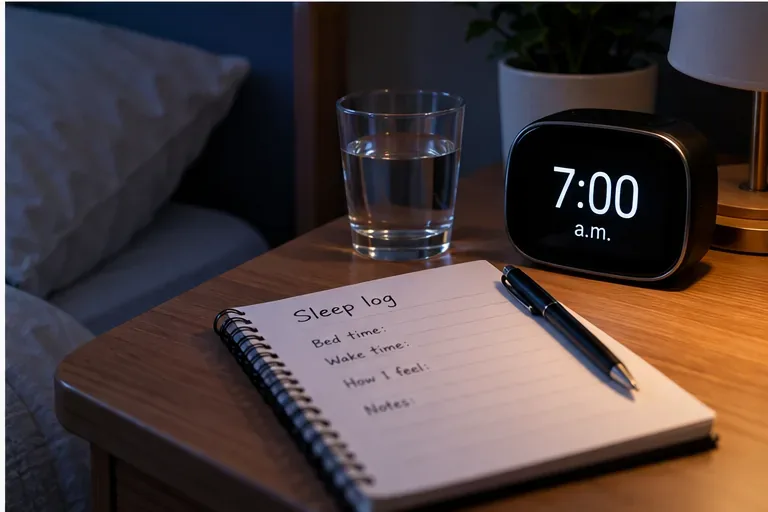
The first night after the clock change can be misleading. You may fall asleep earlier, wake earlier, or simply notice the clock more than usual. Instead of reacting to one imperfect night, watch the pattern for several days. A basic sleep log can help without turning sleep into a performance test.
A simple sleep log can track bedtime, wake time, and daytime alertness while you adjust to standard time.
Record only a few useful details: bedtime, estimated wake time, naps, caffeine late in the day, and how alert you felt the next morning. Avoid repeatedly checking the clock during the night. NHLBI notes that worrying about sleep and watching the clock can itself contribute to insomnia.
What you notice
Reasonable first adjustment
You are sleepy unusually early in the evening
Keep your target wake time steady and use normal evening light and activity until your planned wind-down.
You wake earlier than desired
Avoid turning one early waking into a very early new schedule; keep the room dark and quiet until close to your normal wake time when practical.
You cannot fall asleep at the new bedtime
Do not force an extremely early bedtime. Keep the wind-down routine consistent and avoid late caffeine, alcohol, and long evening naps.
You feel drowsy during the day
Prioritize adequate nighttime sleep and be cautious with driving or other safety-sensitive tasks when sleepy.
Common mistakes to avoid during the November clock change
Treating the extra hour as permission to stay up much later. The clock gives you an additional clock hour that night, but a large bedtime shift can still disturb your routine.
Trying to “fix” one bad night with alcohol. Alcohol may make falling asleep feel easier while degrading sleep quality later in the night. It is not a reliable sleep adjustment tool.
Starting melatonin or an antihistamine automatically. A supplement or OTC product can have side effects, interactions, labeling limitations, or next-day effects. The safer beginner approach is to start with schedule, light, environment, and routine. If medication seems necessary, discuss it with a qualified health professional.
Sleeping in for several hours after a rough night. That may reduce sleep pressure the following evening and extend the adjustment. A consistent wake time is usually a more useful anchor.
Assuming every part of the United States changes clocks. Hawaii, most of Arizona, and several U.S. territories do not observe daylight saving time. Check your local rule before changing alarms or household clocks.
When a clock change is probably not the whole explanation
A brief adjustment period around the seasonal time change is different from persistent insomnia. If difficulty falling asleep, staying asleep, or functioning during the day continues well beyond the transition, or if sleep problems are severe, recurring, or connected with another health condition or medication, consider talking with a health care professional. Persistent insomnia has evidence-based treatments, including cognitive behavioral therapy for insomnia (CBT-I), which focuses on sleep-related behaviors and thought patterns rather than simply sedating the person.
For children, pregnancy, older adults, people taking prescription medicines, and anyone considering a supplement because of an ongoing sleep problem, professional guidance is especially useful because risks and interactions can differ. The goal of preparing for the November clock change is modest: protect a regular wake time, get appropriate daylight, wind down predictably, and give your body a few days to adapt without turning a one-hour time shift into an experiment with sleep drugs.
A simple plan for October 30 through November 2
Friday, October 30: Confirm whether your location observes daylight saving time and verify that automatic time settings are working.
Saturday, October 31: Keep your normal daytime activity, limit late caffeine, and follow your usual wind-down instead of intentionally staying up an extra hour.
Sunday, November 1: Wake near your normal target time, get morning daylight when possible, and keep meals and activity on a regular schedule.
Monday, November 2: Use your usual alarm, assess daytime alertness, and continue the routine rather than making another large schedule change.
For most people, the most useful preparation is not a special product. It is a small set of repeatable cues that tell the body when morning starts and when the day is winding down. That approach is inexpensive, easy to reverse if it does not suit you, and consistent with federal sleep-health guidance.