Home
» Skin whitening
»
How to Check a Brightening Product for Unsafe or Undisclosed Ingredients
How to Check a Brightening Product for Unsafe or Undisclosed Ingredients
If you are checking a skin-brightening product for unsafe or hidden ingredients, the most important point is this: you can screen for warning signs at home, but you cannot prove that an undisclosed ingredient is absent without reliable laboratory testing. A clean-looking label, a barcode, or an online listing is not a guarantee that the formula matches what is printed on the package.
For people in the United States, current FDA guidance is especially clear. As of September 2026, the FDA says there are no FDA-approved or otherwise legally marketed over-the-counter skin-lightening products, and it warns that some products sold for “brightening,” “fading,” “whitening,” or “evening” skin tone have contained mercury and/or hydroquinone. The agency has also found products in which those ingredients were not fully disclosed on the label. See the FDA’s current warning on skin products containing mercury and/or hydroquinone.
This does not mean every cosmetic marketed as “brightening” is unsafe. The word is used broadly. A moisturizer or serum may use the term as a cosmetic claim, while another product may be marketed specifically to lighten dark spots or overall skin tone. What matters is the ingredient list, the claims, the product’s regulatory status, and whether the packaging and seller can be verified.
1. Read the full ingredient list before you use the product
Start with the outer box, bottle, jar, tube, package insert, or firmly attached label. In the U.S., retail cosmetics generally must have an ingredient declaration. FDA labeling rules say ingredients are usually listed by common or usual names, generally in descending order of predominance, with specific exceptions for low-concentration ingredients and color additives. You can review the FDA’s summary of cosmetic labeling requirements.
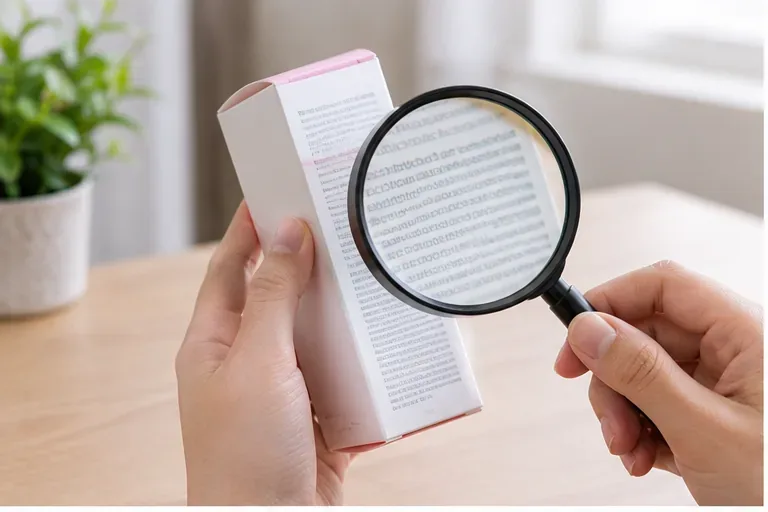
Start with the complete label: inspect the ingredient panel, directions, warnings, and the manufacturer or distributor information before use.
Look specifically for hydroquinone and for mercury-related terms such as mercury, mercurous chloride, calomel, mercuric, mercurio, or Hg. FDA says consumers should not purchase over-the-counter skin-lightening products containing hydroquinone or mercury. Its updated Skin Product Safety guidance lists these mercury names explicitly.
Common explanation, not automatically a red flag: cosmetic ingredient names can be unfamiliar or technical, and a small package may place the ingredient list on an outer carton, attached tag, or accompanying material rather than on the jar itself. For mail-order cosmetics, FDA rules can also allow instructions for locating the ingredient declaration online or requesting it.
Red flag: there is no ingredient list anywhere, the label appears homemade or altered, or a U.S.-marketed product has no English labeling. FDA specifically advises avoiding skin-lightening products with no label, handmade labels, or labels only in another language when English labeling is required.
2. Do not treat “FDA registered,” a barcode, or a certificate as proof of approval
A polished website can make a questionable product look legitimate. One of the easiest mistakes is assuming that a registration number, barcode, QR code, “FDA listed” statement, or certificate means FDA reviewed and approved the cosmetic formula.
That is not how U.S. cosmetic regulation works. Under the Modernization of Cosmetics Regulation Act, many cosmetic facilities must register and many marketed cosmetic products must be listed with FDA, but the FDA states that facility registration and product listing are not cosmetic approval programs. In September 2026, FDA also clarified that it does not issue certificates or letters verifying cosmetic facility-registration compliance. See the FDA’s cosmetic registration and product-listing information and its September 2026 clarification about compliance certificates.
Verify claims against an official regulator’s website rather than relying on a seller’s badge, certificate, barcode, or “registered” language.
Action: search the exact product name, brand, and seller on the FDA website and check recent warnings, recalls, and enforcement notices. If you live outside the U.S., use the equivalent national medicines or cosmetics regulator because legal status differs by country.
3. Check the FDA’s current warning list for tested skin-lightening products
For undisclosed ingredients, this is one of the most useful checks available to consumers. FDA has laboratory-tested a number of skin-lightening products and published results showing high levels of mercury and/or hydroquinone in some of them. The current warning page includes a table of tested products, sellers, country of origin, test year, and laboratory findings.
If your exact product appears there, follow the FDA warning rather than the seller’s marketing. If it does not appear there, that does not prove it is free of hidden ingredients. Public testing lists cover only products that regulators have sampled and tested.
Common explanation: a legitimate product may not appear in an enforcement database simply because it has not been the subject of a warning or test.
Red flag: the same product name or seller appears in an FDA warning letter or laboratory-tested list for mercury, hydroquinone, or other regulatory violations. FDA issued 2026 warning letters after laboratory analysis confirmed high mercury levels in certain skin-lightening products, illustrating why regulator testing matters more than package claims.
4. Be especially cautious with products that promise rapid or dramatic lightening
Marketing language alone cannot tell you what is in a product, but extreme claims deserve more scrutiny. Be cautious when a product promises to change skin color very quickly, “bleach” the skin, permanently remove pigmentation, or produce medical-style results without naming an active ingredient or providing appropriate directions and warnings.
Avoid using an unlabeled or poorly identified brightening product until its ingredients and source can be verified.
Also distinguish topical cosmetics from injectable products. FDA has not approved any injectable drug for skin whitening or lightening and has warned that such products may contain unknown harmful ingredients or contaminants. If a seller offers injections, IV preparations, or products intended to be injected for cosmetic lightening, that is a major safety red flag rather than a stronger version of a topical cream.
5. Know what a label can and cannot tell you
An ingredient list is useful, but it has limits. If a manufacturer intentionally omits an ingredient, uses the wrong label, counterfeits another brand’s packaging, or contaminates a product during manufacturing, a consumer cannot detect that reliably by reading the box.
Home “tests” promoted online for mercury or other hidden ingredients may also be misleading if they have not been validated for the product matrix and concentration involved. A color change or smell is not a dependable substitute for analytical testing.
What you can verify yourself:
whether a complete ingredient list is provided;
whether mercury-related terms or hydroquinone are listed;
whether the manufacturer or distributor is identifiable;
whether the packaging has a lot or batch identifier and intact seals;
whether the product or seller appears in an official warning or recall;
whether the seller is making false-sounding claims about FDA approval or certification.
What you cannot reliably verify at home: whether a hidden drug, heavy metal, steroid, contaminant, or different concentration is actually present. That requires appropriate laboratory analysis.
6. If you are concerned, preserve the product information before discarding it
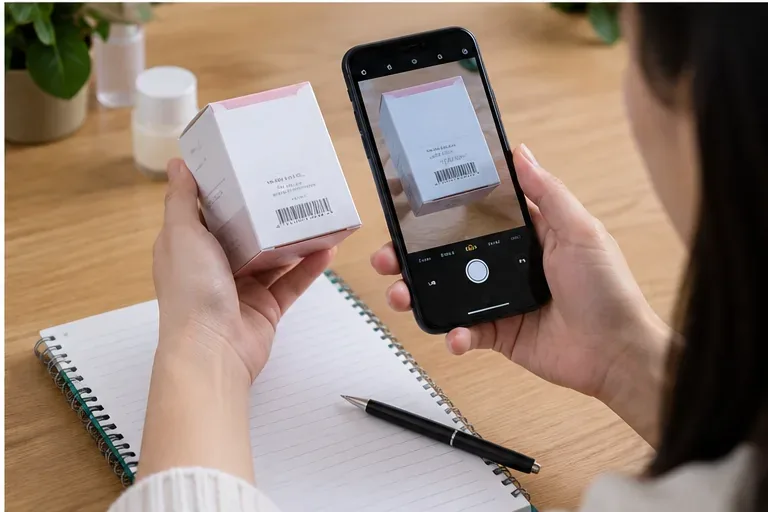
If a product seems questionable or you develop a reaction, do not throw away all identifying information immediately. Photograph the front and back labels, ingredient list, lot or batch number, seller information, receipt or order confirmation, and any website listing. That information can be useful to a clinician, poison center, retailer, or regulator.
Document the package, lot or batch information, seller, and ingredient panel so you have a record if you need medical or regulatory advice.
FDA encourages consumers to report serious reactions and product-quality problems through MedWatch. For questions about possible mercury exposure in the U.S., the FDA also directs consumers to Poison Control at 1-800-222-1222.
Common irritation versus warning signs that need medical review
Brightening products can cause ordinary irritation for many reasons, including fragrance, exfoliating acids, retinoids, or simply using too many active products together. Mild temporary dryness, stinging, or redness can occur with some skincare products and does not by itself prove that a dangerous hidden ingredient is present.
However, you should stop using a questionable product and seek medical advice if you develop a significant or persistent rash, facial swelling, marked skin discoloration, or other worsening symptoms. FDA has received reports of rashes, facial swelling, and ochronosis, a potentially permanent dark discoloration, with hydroquinone-containing skin-lightening products.
Mercury exposure is a different concern because effects may extend beyond the skin. FDA lists possible problems including tremor, tingling or numbness, headaches, fatigue, mood or cognitive changes, kidney injury, and direct skin injury after repeated exposure. These symptoms are not specific to mercury and should not be self-diagnosed from a checklist, but they are reasons to tell a clinician about any skin-lightening product you have been using. Children and pregnant individuals may face higher risk from mercury exposure.
A quick safety checklist before you use a brightening product
Check
Usually reassuring
Red flag
Ingredient list
Complete and readable
Missing, altered, or handmade label
Mercury terms
None listed
Mercury, mercurous chloride, calomel, mercuric, mercurio, or Hg
Hydroquinone in a U.S. OTC skin-lightener
Not present
Listed in an OTC skin-lightening product
Regulatory claim
Seller gives verifiable manufacturer details
Claims a cosmetic is “FDA approved” based only on registration or a certificate
Official warnings
No matching warning found
Exact product or seller appears in an FDA alert, warning letter, or tested-product list
Product form
Topical cosmetic used as directed
Injectable skin-whitening or lightening product
The bottom line
The safest way to check a brightening product is to combine three steps: read the entire label, verify the product and seller against official regulatory sources, and treat missing or suspicious information as a reason not to use the product until it can be clarified. In the U.S., mercury-containing skin-lightening products and OTC hydroquinone skin-lightening products are major regulatory and safety concerns.
Most importantly, do not assume that “not listed on the label” means “not present.” If a product has no reliable labeling, appears in an official warning, causes a significant reaction, or raises concern about mercury or another hidden ingredient, stop using it and seek advice from a health professional or poison center rather than trying to diagnose the cause yourself.