Home
» Skin care secret
»
How to Protect Your Skin Barrier While Using Active Ingredients
How to Protect Your Skin Barrier While Using Active Ingredients
Adding a retinoid, exfoliating acid, or acne treatment can make a routine feel more effective—and sometimes leave skin tight, flaky, or stinging. The useful question is not whether every active ingredient is “bad” for the skin barrier. It is whether the product, dose, schedule, and supporting routine fit your skin and the product’s directions. The habits below can lower avoidable irritation, but they cannot identify the cause of a rash or replace medical advice.
Start with a small, stable routine
The skin barrier helps limit water loss and protect against irritants. A practical routine gives an active ingredient room to work while reducing extra friction and dryness. Begin with a gentle cleanser, one targeted active, a moisturizer, and daytime sun protection. If you already have a clinician-directed regimen, follow those instructions before general skincare advice.
When you add an over-the-counter active, change one thing at a time. That makes it easier to notice which product is helping or causing a reaction. Read the label for application amount, frequency, and warnings; “stronger” or “more often” is not automatically better. For prescription products, ask the prescriber or pharmacist before changing the schedule.
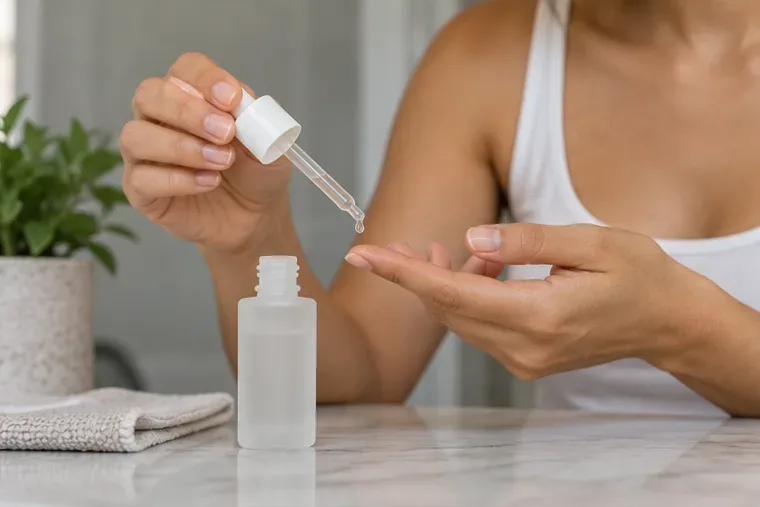
A small amount of serum on a fingertip illustrates keeping a new active ingredient’s application measured and controlled.
Choose a pace that matches your skin and the product
Retinoids can cause dryness and irritation, especially when someone starts too aggressively. The American Academy of Dermatology (AAD) advises beginning with the least-intense retinoid formula available and using it every other night at first, then building gradually as tolerated. This is general advice for retinoid products, not a substitute for a prescription label or a personalized treatment plan. Some prescriptions have a different schedule.
If you are using a nonprescription active and developing mild dryness, a slower introduction or fewer active nights may be more useful than adding another treatment. Avoid starting several new products in the same week. If you need a specific result, such as acne control or pigment treatment, a dermatologist can help weigh speed against irritation risk. People with darker skin may be more likely to notice dark marks after inflammation, so persistent irritation deserves attention rather than “pushing through.”
For a product that must be washed off, follow its stated contact time. Do not leave it on longer to intensify results. For products meant to remain on skin, use the labeled amount and frequency.
Compare habits by practical trade-offs
Choice
May suit
Trade-off and useful next step
One active at a time
Anyone building or troubleshooting a routine
Results may take patience, but it is easier to identify a trigger. Keep the other products familiar while you assess tolerance.
Gentle cleanser and hands
Dry, sensitive, or irritated-feeling skin
It may feel less “deep-cleaning” than a scrub. Wash gently with lukewarm water and avoid brushes, rough cloths, and repeated cleansing.
Richer cream or ointment
Skin that feels dry or tight
It can feel heavier or greasy. Try a lighter lotion if that texture is uncomfortable, rather than skipping moisturizer altogether.
Lightweight, noncomedogenic moisturizer
Oily or acne-prone skin
“Noncomedogenic” does not guarantee that a product suits everyone. If a formula stings or seems to worsen symptoms, stop it and reassess.
Sun protection and clothing
Anyone using an exfoliating acid, especially an AHA
Sunscreen can sting some people’s skin; look for a comfortable formula and use shade, a hat, and protective clothing as added options.
Moisturizer is not a treatment that instantly repairs every cause of irritation, but it can support comfort and make some active routines easier to tolerate. AAD guidance for acne-prone skin notes that moisturizer may be useful because acne treatments can dry or irritate skin. For dry skin, creams and ointments generally hold moisture better than lighter lotions; the best texture is the one you can apply consistently without discomfort. See AAD’s moisturizer guide for how product textures differ.
Cleanse gently; do not stack exfoliation by default
Use a mild cleanser, lukewarm water, and fingertips. Pat dry instead of rubbing. A “squeaky clean” feeling is not a measure of a healthy barrier. Scrubs, cleansing brushes, and frequent exfoliation can add mechanical irritation; alpha hydroxy acids and beta hydroxy acids add chemical exfoliation. The AAD cautions that exfoliating while using retinoids, retinol, or benzoyl peroxide can worsen dryness or irritation for some people.
That does not mean every combination is always unsafe: the ingredients, strengths, formulation, schedule, and the person’s skin all matter. But stacking multiple exfoliants with a retinoid is a poor experiment when your skin is already dry or sensitive. Pause optional exfoliation first and follow the directions for any prescribed or acne treatment. AAD guidance on safe at-home exfoliation explains why product choice and frequency should reflect skin type and other products in use.
Rinsing with hands and lukewarm water keeps cleansing simple when the skin feels dry or sensitive.
Use moisturizer and sunscreen strategically
Apply moisturizer after cleansing, while skin is slightly damp if that feels comfortable. Choose based on how your skin feels: a cream or ointment may be preferable for dry areas, while a lighter lotion may feel better on oily or acne-prone skin. If a product causes burning, itching, or swelling, do not assume that discomfort means it is working. Try fewer products and seek advice if the reaction is significant or does not settle.
For daytime, use broad-spectrum sunscreen with SPF 30 or higher and reapply according to the label, especially after swimming, sweating, or towel drying. The FDA advises sun protection while using topical alpha hydroxy acids because they may increase sun sensitivity; its AHA guidance says this precaution also applies for a week after stopping the product. Protective clothing and shade matter too. AAD guidance for retinoid use also emphasizes daytime sun protection.
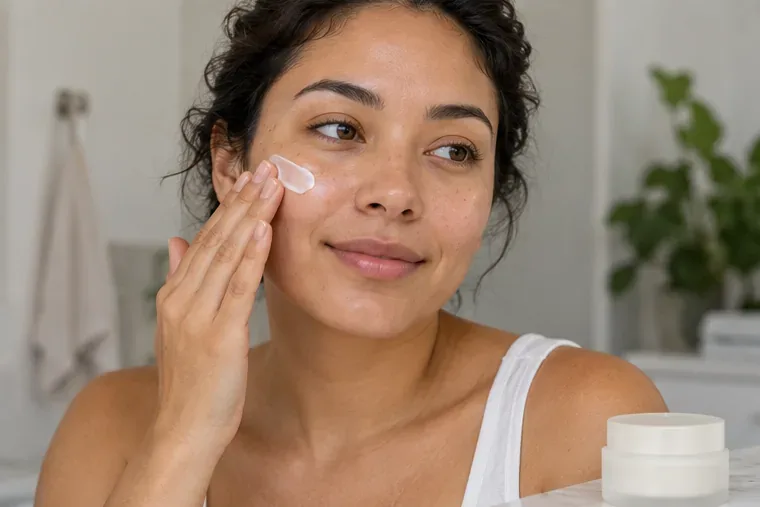
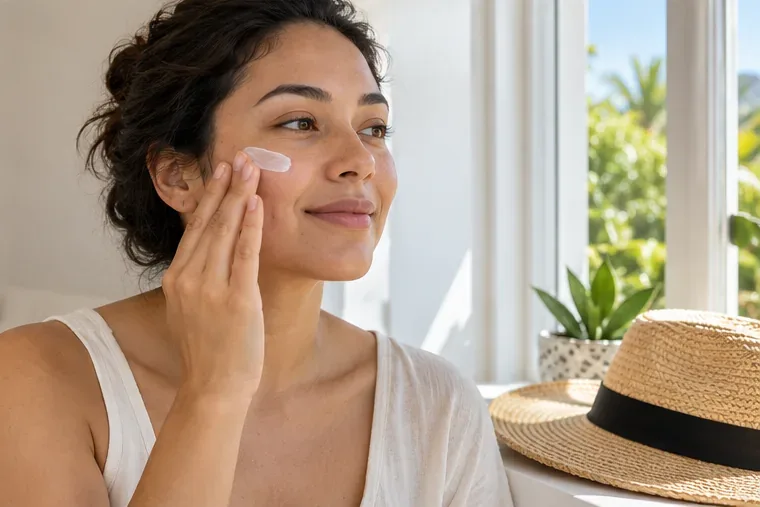
A light layer of moisturizer is being spread across the cheek after cleansing.A person applies sunscreen indoors near a window as part of a daytime sun-protection routine.
Patch-test new products, with realistic expectations
Before adding a product, AAD recommends applying it to a small test spot twice daily for seven to 10 days, following its normal use instructions. A leave-on product stays on the test spot; a rinse-off cleanser is left for the label’s contact time. If redness, itching, or swelling appears, wash it off and do not use it again. A home test can help predict a reaction, but it cannot guarantee that a product will never irritate your face later or prove that it is safe for every use.
Labels also have limits. “Fragrance-free” may be a useful choice for someone who reacts to fragrance, but botanical or “unscented” products can still contain fragrance-related ingredients. “Natural” does not mean nonirritating. If you repeatedly react to products or cannot identify a trigger, a dermatologist can assess the problem; medical patch testing is different from a home spot test. See AAD’s product-testing instructions.
Common adjustment versus a red flag
Some actives, including retinol and glycolic acid, can cause temporary irritation, particularly on sensitive skin. Mild, short-lived dryness or flaking may occur, but severity and persistence matter. Burning that continues, worsening redness, marked itching, swelling, painful cracks, blisters, or a rash spreading beyond the application area are reasons to stop the new nonprescription product and contact a healthcare professional. AAD advises washing off a product after a reaction and not using it again; a severe reaction that does not improve with simple measures should be evaluated.
Seek urgent care for difficulty breathing, faintness, or swelling of the lips, tongue, or throat. This is general safety guidance, not a way to identify the cause of symptoms. If symptoms involve the eyes, are severe, or keep returning, get medical advice promptly rather than trying more products. Do not use an active on broken, sunburned, or acutely inflamed skin unless a clinician specifically directs you to.
Quick routine check
Did I add only one new active, and am I following its label or prescription instructions?
Can I cleanse without scrubbing, hot water, or repeated washing?
Do I have a moisturizer texture I can use without stinging or discomfort?
Am I protecting my skin from sun, particularly while using an AHA?
Is the reaction mild and improving, or severe, persistent, spreading, or swollen?
If I cannot tell what is causing a reaction, have I stopped experimenting and asked a clinician?
For most routines, barrier-friendly care means keeping the basics steady, introducing actives gradually, and adjusting based on the product directions and your skin’s response. If an active is prescribed, pregnancy is possible, or irritation is more than mild, ask the prescribing clinician before changing or restarting it. These steps help you assess your routine; they do not diagnose a skin condition.