Home
» Respiratory disease
»
Autumn Cough After School Starts: When Should a Child Be Assessed?
Autumn Cough After School Starts: When Should a Child Be Assessed?
The first weeks of school can bring a familiar worry: a child comes home with a runny nose and starts coughing at bedtime. If the child is breathing comfortably, drinking, and acting much like themselves, a short-lived cough can often be watched at home. The key is to notice how the child is doing overall, whether symptoms are improving, and whether the cough has a pattern that deserves a closer look.
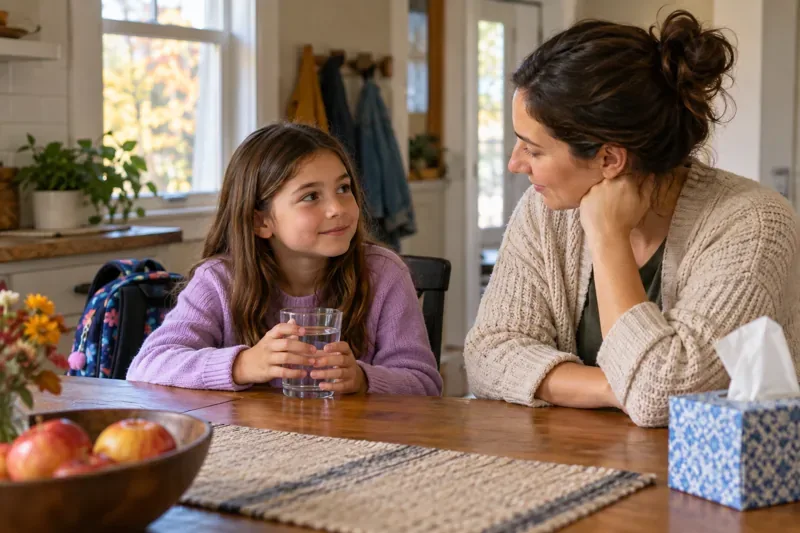
A parent checks in with a school-aged child after the school day, with water and tissues close at hand.
This guide is for general information, not a diagnosis. A child who seems seriously ill needs timely care even if a symptom does not fit a checklist.
Why can a cough start after school begins?
More time around classmates means more chances to encounter respiratory viruses. A cough may come with a common cold, flu, COVID-19, RSV, or another infection; symptoms alone do not reliably identify which one. A cough can also continue after the rest of a viral cold starts to improve because the airways remain irritated for a while. Several illnesses close together can make it seem as if one cough never ends.
Fall can bring other triggers too. Pollen, mold, dust in indoor spaces, smoke, and cold or dry air may irritate sensitive airways. A cough that repeatedly appears with running, at night, or during colds can be a clue to asthma, even when a child does not make an obvious wheezing sound. Allergies may be more likely when an itchy nose or eyes and repeated sneezing accompany the cough. These patterns are useful to report; they cannot confirm a cause by themselves.
Less commonly, a serious infection can begin with cold-like symptoms. Whooping cough (pertussis) is one reason to call when a cough comes in intense spells, causes vomiting, or is followed by a high-pitched gasp or “whoop,” especially after a known exposure. The classic sound may be absent, so do not wait for it if the child is struggling to breathe or getting worse.
First check: does your child need emergency care?
Get emergency help now—call 911 in the United States—if your child is working hard to breathe, breathing very fast, has skin pulling in between or below the ribs, has blue or gray lips or face, cannot speak or cry normally because of breathlessness, has pauses in breathing, or is unusually difficult to wake. Severe dehydration, such as being unable to keep fluids down with very little urination, also needs urgent assessment. Do not wait to see whether a home remedy works when breathing or alertness is seriously affected.
If your child has asthma, follow the written asthma action plan. If the plan’s rescue treatment is not helping as expected, or breathing worsens, seek urgent care. AAP guidance describes blue or gray color, visible retractions, and severe breathing distress as emergency signs; see its parent guide to choosing emergency, urgent, or pediatrician care.
When should you call the pediatrician?
Call the child’s clinician promptly for a cough that is worsening, interferes with drinking or sleep, comes with wheezing or chest pain, or returns after getting better. The CDC advises medical care for respiratory-virus symptoms with trouble or fast breathing, dehydration, fever lasting more than four days, symptoms lasting more than 10 days without improvement, or symptoms that improve and then return or worsen. Those time points are practical signals to check in, not a reason to delay care when a child looks unwell.
Arrange an appointment if the daytime cough lasts beyond about 10 days without improvement, if it is still present after roughly three weeks, or if similar coughs keep recurring. A cough can linger after a virus, so duration alone does not prove a bacterial infection or mean antibiotics are needed. But a clinician can listen to the lungs, review the pattern and exposures, and decide whether testing or follow-up makes sense. The CDC’s current common-cold guidance lists when to seek care; the American Academy of Pediatrics’ Children and Colds guidance also advises contacting a pediatrician for a prolonged daytime cough.
Contact the pediatrician sooner if your child has asthma or another ongoing heart, lung, immune, or medical condition that is getting worse, or if they are very young. A baby under 3 months with a temperature of 100.4°F (38°C) or higher needs prompt medical assessment. If you suspect flu or COVID-19 and your child is at higher risk for complications, call early because some treatments are time-sensitive.
Use the cough pattern to decide what to report
What you notice
What to do
One cough with a runny nose; comfortable breathing, normal drinking, and usual energy
Try supportive care and monitor whether the overall illness improves.
Cough mainly at night, with exercise, or repeatedly with colds; wheeze or chest tightness
Book a pediatrician visit to discuss asthma or another airway trigger. Nighttime and exercise patterns matter even if there is no audible wheeze.
Violent coughing fits, vomiting after fits, a whoop or gasp, or known pertussis exposure
Call the clinician promptly and mention the exposure and vaccination history; ask whether the child should avoid close contact while assessed.
Fast or labored breathing, ribs pulling in, blue/gray color, pauses, or hard to wake
Seek emergency care now.
For a visit, note when the cough began, whether it is dry or wet-sounding, whether it wakes the child, what happens with activity, any fever and its duration, fluid intake and urination, known sick contacts, and medicines already given. A brief phone recording of an unusual cough or breathing noise may help the clinician, but never delay urgent care to make one.
What can you safely try at home first?
Offer fluids and rest. Small, frequent drinks may be easier if the throat is sore. Let your child sleep and take a break from strenuous activity while feverish or feeling poorly.
Ease nasal irritation. Saline spray or drops can help with a stuffy nose. A clean cool-mist humidifier may make dry air more comfortable; clean it as directed so it does not grow mold or spread germs.
Use honey only for children at least 1 year old. A small spoonful may soothe a cough. Never give honey to a baby under 12 months because of infant botulism risk.
Check before using cough or cold medicine. CDC guidance says over-the-counter cough and cold medicines are not recommended for children younger than 6 because of potentially serious side effects. Ask the child’s clinician or pharmacist what is appropriate for the child’s age and situation, and use only the label dose. Do not give adult products or combine medicines with overlapping ingredients.
Skip leftover antibiotics. Antibiotics do not treat viral colds and should be used only when a clinician identifies a reason. They will not stop an ordinary viral cough.
These measures may improve comfort, but they do not identify or cure every cause. For the age limits and home-care advice above, check the CDC common-cold treatment page.
How to check whether the plan is working
At least a couple of times each day, ask: Is breathing easy and quiet? Is the child alert and able to drink? Are they urinating about as usual? Is the fever settling, and are symptoms improving overall? Those are more useful signs than whether the cough has vanished overnight. A lingering but gradually easing cough in a comfortable child is different from a cough that is intensifying, repeatedly waking the child, or limiting play and activity.
If the child is getting worse, developing new symptoms, or missing the improvement milestones above, call the pediatrician and update the plan. Follow school and local public-health rules for staying home; CDC school guidance says a child should be well enough to participate and respiratory symptoms should be improving overall for at least 24 hours before return under its general recommendations. If breathing becomes difficult or the child becomes hard to wake, switch from monitoring to emergency care.
Sources and review
Reviewed against official U.S. guidance on September 28, 2026. Recommendations can vary with a child’s age, medical history, local outbreaks, and school policy.