Why Postpartum Bleeding Can Get Heavier Again After It Slows
Postpartum bleeding can become heavier again after it seemed to be slowing, and sometimes there is a straightforward explanation. More activity, breastfeeding, or simply standing up after lying down can temporarily increase lochia, the normal vaginal bleeding and discharge that follows birth. A menstrual period may also return as early as about 5 to 6 weeks after delivery in some people who are not fully breastfeeding.
But bleeding that is suddenly very heavy, keeps getting heavier, comes with large clots, or is accompanied by dizziness, fainting, a fast heartbeat, fever, worsening abdominal pain, or foul-smelling discharge needs prompt medical attention. Heavy postpartum bleeding can occur days or weeks after birth, so a period of improvement does not rule out a later complication.
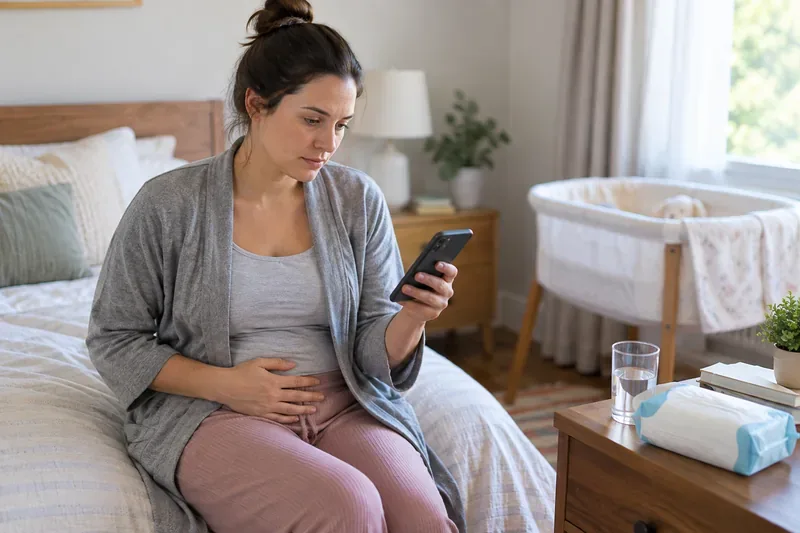
A postpartum patient rests at home with maternity pads and a phone nearby. Tracking whether bleeding is briefly heavier or progressively worsening can help when speaking with a clinician.
First, know what normal postpartum bleeding usually does
Bleeding after birth is called lochia. It happens after both vaginal and cesarean births because the uterus is healing where the placenta was attached and shedding blood, mucus, and tissue. Lochia is generally heaviest soon after delivery, then becomes lighter over the following days and weeks.
The NHS guidance on recovery after birth notes that bleeding typically starts out fairly heavy, gradually becomes brownish, and decreases until it stops. The Royal College of Obstetricians and Gynaecologists also explains that lochia usually changes from bright red toward brown over time and may continue for several weeks. See the RCOG patient guidance on postpartum bleeding.
A pattern that is gradually trending downward is reassuring. The important question is not whether every single pad is lighter than the one before it, but whether the overall amount is decreasing over time.
Common reasons bleeding may briefly increase again
1. You have become more active
Many people notice more bleeding after doing more walking, standing, shopping, housework, or other activity than they had been doing earlier in recovery. An NHS hospital patient guide notes that lochia can become slightly heavier with increased activity, especially during the first two weeks after birth.
For example, someone may have had mostly pink or brown discharge while resting at home, then notice a little more flow after a longer walk. If the increase is modest, settles again with rest, and is not accompanied by other warning signs, activity is one possible explanation.
A useful response is to reduce activity for the rest of the day, hydrate, and watch the trend. If the bleeding continues to increase rather than settling, contact your maternity team or another clinician.
2. Breastfeeding causes the uterus to contract
Breastfeeding releases oxytocin, a hormone that causes the uterus to contract. The NHS notes that bleeding can appear redder or heavier during breastfeeding for this reason. Some people also feel period-like cramps, often called afterpains.
A brief increase around feeds can therefore occur without meaning that something is wrong. The more important distinction is whether the bleeding returns to a lighter baseline afterward or instead becomes persistently heavier.
3. Blood pooled while you were lying down
After sleeping or resting for a while, some blood may collect in the vagina and then come out when you stand. This can look dramatic even when the total amount of blood loss is not actually increasing. A small clot can also pass for the same reason.
What matters is what happens next. A one-time gush after standing that quickly settles is different from repeated gushes, rapidly filling pads, or continued heavy bleeding.
4. Your menstrual period may be returning
If lochia had largely stopped and bleeding begins again several weeks after delivery, a first postpartum period is another possibility. The NHS says a first period can return as early as about 5 to 6 weeks after birth in people who bottle-feed or combine bottle-feeding with breastfeeding. Exclusive breastfeeding often delays the return of periods, but timing varies substantially.
Because lochia, a returning period, and abnormal postpartum bleeding can overlap in timing, do not assume a new episode is “just a period” if it is unusually heavy or comes with pain, fever, dizziness, or other concerning symptoms.
When heavier bleeding is not something to watch at home
The main red flag is heavy bleeding itself. The CDC's urgent maternal warning signs, updated in 2024, advise immediate medical care for postpartum bleeding that soaks through one or more pads in an hour, for clots larger than an egg, or for passing tissue.
The American College of Obstetricians and Gynecologists likewise identifies very heavy postpartum bleeding as a warning sign. ACOG explains that postpartum hemorrhage can happen not only right after birth but also later in the postpartum period. Its postpartum warning guidance highlights heavy or gushing vaginal bleeding, large clots, dizziness, weakness, a rapid heart rate, clammy skin, and faintness as reasons to seek care quickly.
What you notice
What it may mean
What to do
A small, temporary increase after a feed or more activity
Can occur with normal uterine contractions or increased exertion
Rest, monitor the trend, and contact your clinician if it does not settle
A gush after standing up following a long rest
May be pooled blood passing at once
Watch what happens over the next pad or two rather than judging one moment alone
Bleeding that keeps getting heavier instead of lighter
Needs clinical assessment
Contact your maternity team, OB-GYN, midwife, or urgent care service promptly
Soaking through one or more pads in an hour, large clots, or passing tissue
Urgent maternal warning sign
Seek immediate medical care
Heavy bleeding with dizziness, fainting, weakness, or a pounding/fast heartbeat
Possible significant blood loss
Seek emergency care
Bleeding plus fever, foul-smelling discharge, or worsening abdominal pain
Possible postpartum infection or another complication
Get prompt medical evaluation
Why can abnormal bleeding happen days or weeks after birth?
Clinicians use the term secondary postpartum hemorrhage for abnormal or heavy bleeding that occurs after the first 24 hours following birth. The RCOG notes that this can occur up to 12 weeks postpartum. Common causes include infection inside the uterus and, less often, placental tissue that remains in the uterus.
Infection is especially important to consider when heavier bleeding is accompanied by fever, chills, worsening lower abdominal tenderness, feeling unusually unwell, or discharge with an offensive smell. ACOG notes that postpartum endometritis, an infection of the uterine lining, often appears within the first days after delivery but can occur later as well.
Retained placental tissue can also interfere with the uterus shrinking and healing normally. It cannot be diagnosed from bleeding pattern alone; evaluation may involve an examination, blood tests, imaging, or other assessment depending on the clinical situation.
Rather than focusing on color alone, look at the whole pattern:
Amount: Are pads filling faster than before?
Trend: Is the bleeding settling again, or continuing to increase?
Clots: Are they small and occasional, or large and recurring?
Symptoms: Are you dizzy, faint, short of breath, unusually weak, feverish, or having worsening pain?
Discharge: Is there a strong foul smell?
Timing: Did it increase after activity, breastfeeding, or standing after rest?
If you call a clinician, it can help to tell them how many pads you are using, how quickly they are becoming saturated, whether clots are present, and whether you have fever, pain, dizziness, or other symptoms. A photo of a clot or pad may also be useful if your care team asks for one and you are comfortable sharing it.
A few examples
Example 1: Five days after birth, bleeding had become lighter. After walking around a store, it becomes somewhat redder and heavier, then eases again after resting. There is no fever, dizziness, or significant pain. Increased activity could be a reasonable explanation, but the person should still watch whether the overall trend returns to lighter bleeding.
Example 2: Two weeks after birth, bleeding that had been tapering suddenly becomes heavy enough to soak a pad within an hour, with repeated large clots and lightheadedness. That pattern fits urgent warning criteria and should not be monitored at home.
Example 3: Three weeks after birth, bleeding becomes heavier and is accompanied by a temperature of 100.4°F (38°C), worsening lower abdominal pain, and foul-smelling discharge. That combination warrants prompt evaluation for infection or another postpartum complication.
When in doubt, use the safer threshold
Postpartum bleeding is expected, and brief increases can happen for ordinary reasons. What is not expected is a progressive increase, sudden very heavy flow, large clots, or bleeding paired with systemic symptoms such as fainting, fever, severe weakness, shortness of breath, or a racing heart.
If you have given birth recently and something feels significantly different from your prior recovery pattern, contacting your maternity unit, midwife, OB-GYN, or other health professional is appropriate even if you are not sure whether the bleeding meets a formal threshold. The CDC Hear Her campaign specifically advises postpartum patients to seek care for urgent warning signs and to speak up about symptoms that feel unusual or concerning.
This information is educational and cannot determine the cause of bleeding in an individual person. A clinician can assess the amount of blood loss, vital signs, infection symptoms, uterine healing, and other factors that are not possible to judge reliably from bleeding description alone.