How to Build One Accurate Family Medicine List for Kids and Adults
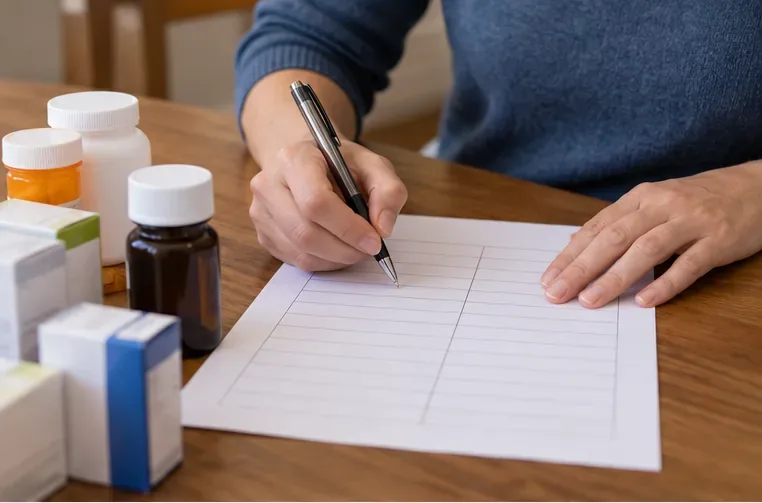
Compare paper, phone, portal, and shared-list options, then create a clear medicine record for every family member with practical safety checks.
A family medicine list can save time at appointments and help a clinician or pharmacist understand what each person actually uses. The challenge is that “one list for the family” can accidentally blur who takes what. A safer design is one shared family index that points to a clearly separated, current record for each person. Choose a paper, digital, or hybrid format based on who needs access, how often details change, and what will work during an emergency.
The U.S. Food and Drug Administration (FDA) advises that a useful medication list cover prescription medicines, over-the-counter (OTC) products, vitamins, and supplements, and be updated when treatment changes. The Centers for Disease Control and Prevention (CDC) gives additional child-specific safety advice, including checking active ingredients and using the dosing device supplied with a medicine. This guide helps organize information; it cannot determine whether a medicine is appropriate or diagnose a reaction.
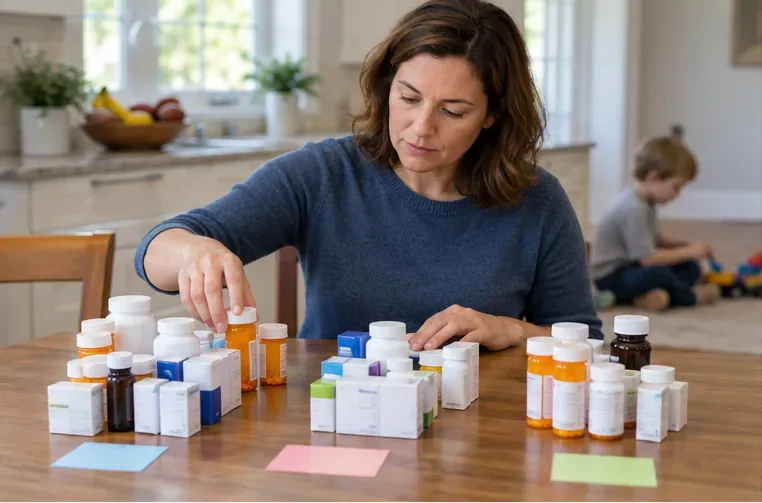
No single format works best for every family. The practical goal is to maintain one trusted, up-to-date source while making a copy easy to reach when needed. FDA notes that a list may be handwritten, kept in a phone app, or made with a form from a health care provider. AHRQ also offers a printable “My Medicines” resource.
| Format | Works well when | Tradeoff to plan for |
|---|---|---|
| Paper sheet or wallet card | A caregiver needs an offline copy, a family member does not use a smartphone, or a clinic asks for a printed list. | It can become outdated or get lost. Date each person’s copy and replace it after a change. |
| Phone note or secure health app | The main caregiver wants a portable list that is quick to edit and share during a call or visit. | A dead battery, locked account, or privacy setting can block access. Keep an emergency paper copy if that matters for your household. |
| Patient portal or pharmacy profile | You want a useful starting point for prescriptions recorded by that health system or pharmacy. | It may not show OTC drugs, supplements, items filled elsewhere, or whether an old prescription is still being taken. Verify it against the person’s current bottles and instructions. |
| Shared family record | More than one caregiver coordinates appointments or medication changes. | Entries can be assigned to the wrong person, and broad access can expose private information. Use a clearly labeled section or separate page for every person and limit editing rights. |
For many households, a practical compromise is a secure digital master plus a dated paper or phone-accessible emergency copy for each person. Do not put every relative’s details into one undivided medication column. A shared index can list names and where each person’s record is stored, while individual records remain distinct.
Collect the containers and current instructions for each person separately. Include prescription medicines, nonprescription or OTC medicines, vitamins, herbal products, and other supplements—even products used only occasionally. Bring along inhalers, eye or ear drops, creams, injections, and as-needed medicines if they are currently used. A current medication list is about what a person takes now, not every product ever prescribed.
For a child, record the exact product name and formulation (for example, liquid versus tablet), its strength or concentration as printed on the label, and the dose and directions exactly as prescribed or labeled. If the family’s clinician uses the child’s weight for medication decisions, note the most recent weight and the date measured so the care team can assess whether it is current. Never calculate or change a child’s dose based on the list alone. CDC advises caregivers to check active ingredients so a child is not given two medicines containing the same ingredient, and to measure liquid doses with the supplied oral syringe or cup—not a household spoon.
Use the same fields on every person’s page so the household can compare entries without mixing them up. A clear record usually includes:
“Medication reconciliation” means comparing different medicine records with what a person is actually using, then resolving differences with a health professional. When a discharge summary, portal, bottle label, and family notes do not match, do not guess which one is right or silently delete an entry. Mark it “verify” and ask the prescriber or pharmacist to clarify. AHRQ’s patient list and FDA’s My Medicines guidance are useful models, but a template is not a substitute for reconciliation.

A portal list can be a good starting point, but records do not always update together across clinics and pharmacies. This common mismatch is usually a reason to verify, not a reason to assume someone made an error. Similarly, a brand name and a generic name may refer to the same active ingredient; compare the ingredient and ask a pharmacist if you are unsure. Avoid recording a guessed dose, using a family member’s old bottle as the source of truth, or treating a “not sure” allergy history as confirmed or disproved.

Differences between a portal, printed discharge list, and home bottles can happen because one record was updated later, a product was filled at another pharmacy, or the list omitted an occasional OTC medicine or supplement. These are common explanations, but they do not establish which instruction is correct. Contact the prescribing clinician or pharmacist to confirm before relying on an unclear entry, especially when a child’s medicine, dose, or formulation is involved.
Some situations need immediate help rather than a routine list update. If anyone may have taken the wrong medicine, an extra dose, or an unknown amount—or a child may have reached a medicine—contact Poison Control right away and do not wait for symptoms. In the United States, call 1-800-222-1222 or use the online tool at Poison Control. If the person collapses, has a seizure, has trouble breathing, or cannot be awakened, call 911. These steps are for possible poisoning or severe symptoms; they do not identify the cause. Keep the package nearby and share the exact name, strength, amount if known, age, and time of exposure with the poison specialist.
A known severe allergy, an unexplained serious reaction, or uncertainty about whether a medicine should be given warrants prompt professional advice. A list can help clinicians respond, but it should never be used to start, stop, share, or adjust medication without the appropriate prescriber or pharmacist’s direction.
The most dependable “one list” is not one page that blends a whole household’s prescriptions. It is a shared system with separate, clearly identified records, a named person responsible for updates, and a professional check whenever the real-world instructions do not line up.
Guidance checked September 30, 2026. This article is general information, not individualized medical advice.
Compare paper, phone, portal, and shared-list options, then create a clear medicine record for every family member with practical safety checks.
Discover how fertility medications affect menstrual cycles. Learn about side effects, ovulation stimulation risks, and expert-approved solutions for managing reproductive health.
Cabbage contains very few calories, but is an excellent source of nutrients for health. But many people still wonder if cabbage can be eaten raw? Let's find out together!
Needle mushroom is a food that many Vietnamese people use to cook hot pot dishes. However, using them improperly can cause your body to be poisoned. Can enoki mushrooms be eaten raw? Let's find out now.
Is Old Spice deodorant any good? This is definitely the most popular question. Body odor affects self-confidence when communicating with people. Because of this, many people have chosen Old Spice deodorant. But is this product really good and removes body odor as desired?
Almonds are a favorite food of many people. Almonds have a characteristic fatty flavor and are often used in daily cooking, baking, candy, .. or used directly. However, many people wonder if almonds can be eaten raw?
Oyster sauce is a rich sauce, widely used as a condiment or dipping sauce to enhance the flavor of dishes. However, is oyster sauce edible raw or not?
The foreskin is part of the male genitals. Should long foreskin should be cut is a question of many men because this condition greatly affects the psychology and sex life of men. SignsSymptomsList will help you answer questions related to the problem of long foreskin.
Raising young children is an age-old topic that many young parents are interested in. Feeding your baby at what age is one of the big worries, especially for babies at the end of the weaning period. So how many months can babies eat rice? Let's find out now.
Hair follicles are hair roots located deep in the scalp. If this part is weak, it will lead to hair loss, dryness and split ends. So what causes weak hair follicles and how to fix them, SignsSymptomsList will show you in today's article.