Home
» Dermatology
»
Why Dermatology Symptoms Can Come and Go—and What to Track Before Your Appointment
Why Dermatology Symptoms Can Come and Go—and What to Track Before Your Appointment
A rash that is obvious on Monday may look nearly normal by the time of a Friday appointment. Facial redness can flare after heat or exercise and settle later. Hives may disappear within hours and then reappear elsewhere. Eczema can improve for days or weeks before returning. This pattern can be frustrating, especially when you worry that a clinician will not be able to see what happened.
Current dermatology guidance recognizes that many skin conditions are intermittent. The American Academy of Dermatology notes that individual hives often disappear within 24 hours even while new ones appear, atopic dermatitis can wax and wane for years, contact dermatitis can come and go with intermittent exposure, and rosacea signs may flare and fade. That does not mean every recurring rash has one of those diagnoses. The practical goal is to document the pattern clearly enough that a clinician can connect timing, appearance, exposures, symptoms, and treatment response.
Photos taken during a flare, plus a short timeline of symptoms, exposures, and treatments, can help a dermatologist evaluate a problem that looks different on appointment day.
Why can skin symptoms disappear and return?
Several well-established mechanisms can make dermatology symptoms fluctuate. The exact explanation depends on the condition, so these patterns are clues rather than diagnoses.
Triggers may be intermittent
Some reactions appear only after contact with a specific irritant or allergen. The AAD notes that contact dermatitis can come and go when exposure happens only occasionally. Fragrances, metals, cleaning products, disinfectants, personal-care products, workplace materials, and many other substances can be involved.
Allergic contact dermatitis can also be delayed, so the rash may appear hours or days after exposure rather than immediately. That delay makes the connection less obvious.
Action: Record new or repeated exposures during the 24 to 72 hours before a flare, including skin-care products, hair products, cosmetics, jewelry, gloves, cleaning agents, hobbies, work materials, plants, and topical medications. A dermatologist may decide that patch testing is appropriate, but a diary alone cannot identify the allergen with certainty.
Inflammatory skin conditions often have flare-and-remission patterns
Atopic dermatitis can improve and then flare again in the same or different areas. The AAD describes this waxing-and-waning pattern as common. Rosacea can also produce redness, warmth, irritation, and acne-like bumps that vary over time. Hives are particularly transient: an individual welt generally fades within 24 hours, while new welts may appear elsewhere.
Action: Do not judge the entire condition by one “good skin day” or one severe flare. Track the frequency and duration of flares over several weeks, and note whether the affected areas stay the same or move.
Heat, pressure, friction, stress, and environment can change what you see
Many skin symptoms respond to environmental or physical conditions. Some types of hives can be triggered by pressure, cold, heat, or sunlight. Rosacea symptoms may vary with heat and other individual triggers. Irritant dermatitis can worsen with repeated washing, friction, disinfectants, or occupational exposure.
These relationships are not universal. A factor that triggers one person may have no effect on another.
Action: Note temperature, sun exposure, sweating, exercise, friction, pressure, travel, humidity changes, and unusual stress when a flare occurs. Do not deliberately expose yourself to a suspected trigger just to “test” it.
Treatment can partially suppress symptoms without identifying the cause
Moisturizers, topical steroids, antihistamines, acne products, and other treatments may reduce visible symptoms before an appointment. That improvement can be useful, but it can also make the original pattern harder to reconstruct if you do not remember what the skin looked like beforehand.
Action: Record the exact product or medication name, strength if known, where you applied it, how often you used it, and what changed afterward. Do not stop a prescribed treatment before an appointment unless the prescribing clinician tells you to do so.
Common misunderstanding: “If it disappears, it cannot be important”
Intermittent symptoms can still deserve evaluation. Hives that recur on most days for six weeks or longer meet the definition of chronic urticaria, according to the AAD. Recurrent facial flushing with eye symptoms, repeated dermatitis in the same exposure pattern, or eczema that repeatedly disrupts sleep can all matter even if the skin sometimes looks normal.
What matters is not only whether the rash is present today, but how often it happens, how severe it becomes, whether it is progressing, and whether other symptoms occur at the same time.
Action: Mark the start and end of each episode and estimate how much of the body is involved. Note itch, pain, burning, swelling, sleep disruption, fever, eye symptoms, breathing symptoms, and whether the flare interferes with work or daily activities.
What should you track before a dermatology appointment?
Detail to record
Why it helps
Date and time symptoms started
Helps establish duration and whether the pattern is acute, recurrent, or chronic.
Exact body location
Distribution can help distinguish conditions that otherwise look similar.
Appearance
Color, bumps, scaling, blisters, welts, crusting, cracks, or swelling provide diagnostic clues.
Sensation
Itch, pain, burning, tenderness, or warmth can change the differential diagnosis.
How long each spot lasts
For example, individual hives usually resolve within 24 hours even when new ones continue to appear.
Possible exposures
Products, metals, work materials, plants, detergents, medications, sun, heat, friction, or pressure may be relevant.
Treatments tried
Response or worsening after a treatment can guide next steps.
Associated symptoms
Fever, eye irritation, breathing trouble, joint symptoms, or systemic illness may change urgency.
Take photos when the skin is at its worst
Photographs are especially useful when symptoms come and go. The AAD recommends clear, well-lit images that show the concern accurately. For remote dermatology visits, it advises multiple photos and avoiding actions that temporarily change the skin's appearance before taking them.
A useful set usually includes one wider photo showing where the problem is on the body and one or two closer views showing texture and detail. If possible, photograph the same area under similar lighting each time.
Action: Take photos before applying a new topical product when practical, but do not delay needed treatment to get a better picture. Store the images securely and bring the phone or upload the images through the clinic's recommended secure method.
What products and medications should you bring or list?
For recurrent dermatitis, products can matter as much as medications. The AAD advises people being evaluated for contact dermatitis to mention skin, hair, and nail products, occupational exposures, and when the rash appears.
prescription creams, ointments, pills, and injections;
over-the-counter hydrocortisone, antihistamines, acne products, antifungals, or antibiotic ointments;
moisturizers, cleansers, sunscreen, cosmetics, fragrances, deodorants, and hair products;
new detergents, fabric softeners, disinfectants, or cleaning agents;
supplements or medications started shortly before symptoms changed.
Action: Photograph ingredient labels or bring the products if practical. Do not rely on descriptions such as “the blue moisturizer” or “a natural cream,” because different formulations can contain very different ingredients.
Common misunderstanding: “A normal-looking appointment means nothing can be diagnosed”
Dermatologists routinely evaluate conditions that are not fully active during the visit. History, photos, distribution, timing, treatment response, and examination of residual changes can still be informative. For rosacea, the AAD specifically notes that signs can come and go, so dermatologists ask about the symptom history. For suspected allergic contact dermatitis, patch testing may be used when the trigger is not obvious.
There are also limits. A photo cannot always reproduce texture, temperature, tenderness, scale, or subtle color differences. Some conditions require examination with a dermatoscope, laboratory testing, culture, scraping, biopsy, or another in-person procedure.
Action: If the skin is clear on appointment day, still attend unless the clinic advises otherwise. Bring the timeline and photos rather than waiting indefinitely for the next flare.
What details are especially useful for hives?
Track how long each individual welt stays in one place, not just how long the overall outbreak lasts. The AAD states that individual hives usually disappear within 24 hours. New hives can then appear in other locations.
Also note swelling of the eyelids, lips, hands, or feet and any suspected trigger such as medication, infection, cold, pressure, or heat. Sometimes the cause of chronic spontaneous urticaria remains unknown even after evaluation.
Action: Photograph individual welts and note whether the exact same lesion lasts longer than 24 hours, becomes painful rather than itchy, bruises, or leaves discoloration. Those details can help a clinician decide whether the eruption behaves like typical urticaria or needs a broader evaluation.
What details are useful for eczema or contact dermatitis?
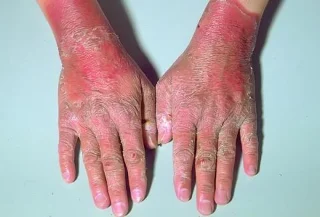
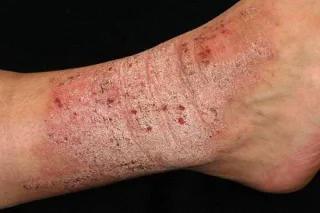
For eczema-like symptoms, note whether the skin is dry, scaly, cracked, oozing, thickened, or intensely itchy. Record whether the problem repeatedly affects hands, eyelids, face, neck, underarms, or areas touched by jewelry, clothing, gloves, or work materials.
Contact dermatitis can be difficult to identify because an allergy may develop even to a product or metal you have used for years. AAD guidance notes that dermatologists often use a detailed exposure history and sometimes patch testing to identify the cause.
Action: Make a one-week exposure list rather than changing many products at once. Simultaneously removing several possible triggers may make it impossible to know which one mattered.
What details are useful for rosacea-like facial symptoms?
Record flushing, persistent color change, bumps or pustules, burning, stinging, dryness, and eye symptoms. Eye irritation, watery or dry eyes, bloodshot eyes, and swollen eyelids can occur with rosacea, and the AAD advises prompt care for eye problems.
Action: Note whether facial symptoms appear after heat, sun, exercise, skin-care products, alcohol, spicy food, or other personal triggers, but do not assume those triggers prove a diagnosis.
Red flags: when a skin problem needs prompt medical attention
Most rashes are not emergencies, but some patterns require faster assessment. The AAD recommends medical care for a rash that covers most of the body, spreads rapidly, becomes painful, blisters or produces open/raw skin, occurs with fever or illness, or involves the eyes, lips, mouth, or genital skin.
Possible infection also deserves attention. Warning signs include pus, yellow or golden crusting, increasing pain, swelling, warmth, unpleasant odor, fever, or swollen lymph nodes.
Seek emergency care for trouble breathing or swallowing, or significant swelling of the lips, eyes, tongue, or face, because these can occur with a severe allergic reaction.
Action: Do not wait for a scheduled dermatology appointment if a red flag develops. Use urgent care, emergency services, or another appropriate medical service based on symptom severity.
How to know whether your tracking is useful
A good symptom record should make three things clearer by the time of your appointment: what the skin actually looked like, what was happening around each flare, and what changed after treatment or avoidance.
Your record does not need to be exhaustive. If it becomes so complicated that you stop using it, simplify it to four fields: date, photo, possible exposure, and symptoms. Add treatments only when you use them.
Action: Review the record the day before your appointment and identify the two or three patterns you most want the clinician to evaluate. Bring a medication list and your questions as well.
What remains uncertain without an examination?
Many skin disorders resemble one another. Acne and rosacea can overlap in appearance. Contact dermatitis can resemble other forms of eczema. Infections, drug eruptions, autoimmune conditions, and inflammatory diseases can sometimes produce similar-looking rashes. Photos and diaries can improve the history, but they cannot confirm a diagnosis on their own.
The purpose of tracking is therefore not to diagnose yourself. It is to preserve information that would otherwise disappear when symptoms fade. That can make the clinical visit more efficient and can help your dermatologist decide whether examination alone is enough or whether testing such as patch testing, scraping, culture, blood tests, or biopsy is appropriate.