Home
» Body
»
Why Can Body Measurements Change When Weight Stays the Same?
Why Can Body Measurements Change When Weight Stays the Same?
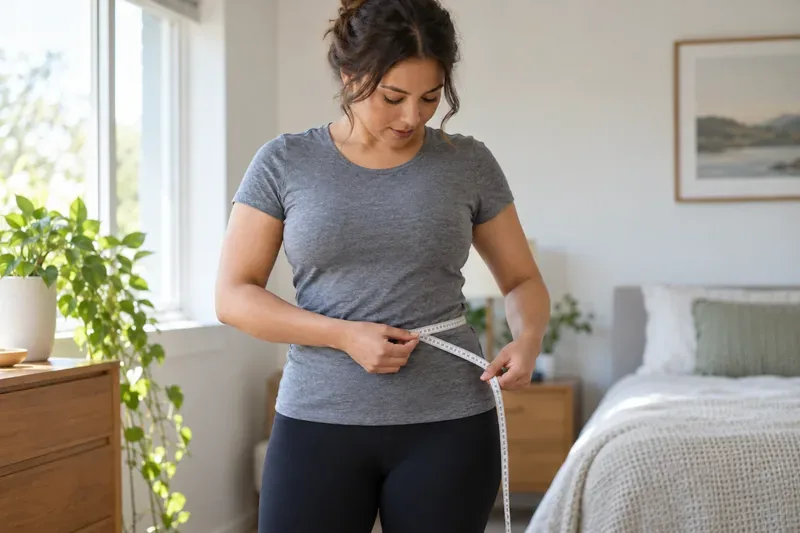
A person checks a waist measurement with a flexible tape. Consistent positioning makes comparisons more useful.
A waist, hip, or thigh measurement can change while the number on the scale looks unchanged. That is possible because weight is a single total, while a tape measure records the circumference of one specific place. The two tools answer different questions, and neither one explains the reason for a change by itself.
Often, the difference comes from how or when the measurement was taken, or from temporary changes such as bloating or fluid. Body composition can also change over time. Those are possibilities, not conclusions about any one person. A persistent, sudden, or symptom-associated change deserves a conversation with a health professional.
What does a steady scale reading actually tell you?
It suggests that total body mass is similar within the scale’s precision and rounding. It does not prove that every tissue, body area, or fluid level is exactly the same. A scale cannot show where weight is carried. Likewise, circumference measurements do not directly measure body fat or identify a medical cause.
Body mass index (BMI) is calculated from height and weight and is used as a screening measure. The CDC explains that BMI does not distinguish fat from muscle or bone, and does not show where fat is distributed. For an individual, it should be considered with other health information rather than treated as a diagnosis. See the CDC’s explanation of BMI and its limits.
Common explanations—and a useful next step for each
1. The tape measure or setup changed
A tape placed a little higher or lower, angled instead of level, pulled tighter, or laid over different clothing can produce a different circumference. Posture and whether you have just inhaled or exhaled can also affect a reading. These sources of variation matter especially when the change is small. There is no value in comparing numbers measured at different body landmarks as if they were interchangeable.
Try this: If you choose to track, use the same soft tape and the same clearly defined site each time. Measure over similar clothing or bare skin, stand in a relaxed posture, keep the tape level and snug without pressing into the skin, and use a similar time of day. Take two readings; if they differ noticeably, reposition and repeat. Record the method along with the number. Clinical and research protocols define specific landmarks because consistency matters; the CDC’s NHANES anthropometry videos show standardized circumference procedures.
2. Bloating, gas, or bowel changes temporarily affect the abdomen
Gas can cause bloating—the feeling of fullness or swelling—and sometimes abdominal distention, meaning the belly becomes visibly larger. These symptoms can vary during or after meals. Constipation and other digestive factors may also change how the abdomen feels or measures. This makes a larger waist reading on one day poor evidence, by itself, of fat gain.
Try this: If the change is mild and comes and goes, note when it occurs, meals, bowel changes, and any discomfort. Avoid drawing a conclusion from one reading. Contact a clinician if symptoms are bothersome, change suddenly, or come with abdominal pain, constipation, diarrhea, or unintentional weight loss. Those are among the reasons NIDDK recommends discussing gas symptoms with a doctor; its gas and bloating guidance describes common symptoms and when to seek advice.
3. Fluid shifts can change how an area looks or feels
Fluid accumulation in tissues can cause swelling, also called edema. Swelling may be more noticeable in the feet or legs after prolonged standing or travel, and can occur during parts of the menstrual cycle or pregnancy. The extent and reason vary by person. A stable scale reading does not rule out a local change in swelling, and a measurement cannot tell whether fluid is the cause.
Try this: Pay attention to where swelling occurs, when it began, and whether it is increasing; share that information and your medication list with a clinician. Do not stop a prescribed medicine or make major salt or fluid changes on your own. MedlinePlus advises prompt medical contact for sudden or worsening swelling, new swelling in one leg, or more than mild or rapidly increasing swelling during pregnancy. MedlinePlus guidance on leg and foot swelling also lists emergency symptoms.
4. Body composition or shape may change over time
Fat, muscle, and other tissues do not have to change in the same direction. If body composition shifts—for example, less fat in one area alongside more lean tissue elsewhere—the scale may move little even as a circumference or clothing fit changes. This is a plausible explanation in some circumstances, but a home scale and tape measure cannot confirm it. It is also not possible to tell from one measurement whether a change is beneficial, harmful, or meaningful for health.
Try this: If you are tracking changes related to exercise, focus on a consistent series of measurements and other relevant measures such as strength or function, not a single tape reading. Ask a health professional what measures are appropriate for your goals and health history. The CDC notes that BMI is not a direct body-fat measure and does not distinguish fat from muscle; its individual-health overview recommends interpreting screening data alongside clinical context.
5. Menstrual timing can matter for some people
Some people notice bloating or cramping in the weeks before a period, and symptoms can vary from cycle to cycle. This is a possible context for a temporary change, not an explanation to assume—especially if the change is new, persistent, or accompanied by other symptoms. People who do not menstruate can ignore this factor.
Try this: If you suspect a recurring pattern, note the timing and symptoms over a couple of cycles and bring the record to an appointment if it is disruptive. The NHS lists bloating among common premenstrual symptoms and suggests keeping a symptom diary; see its PMS guidance.
How can you make measurements more useful?
Choose only the sites that answer a practical question for you; a waist, hip, or thigh measurement is not a complete health assessment.
Use the same tape, landmark, posture, clothing conditions, and approximate time of day.
Write down context that could affect comparison, such as a recent meal, bloating, constipation, exercise, menstrual timing, or swelling.
Look for a consistent trend across repeated readings rather than reacting to a single number. There is no universal home-measurement interval that fits every person or purpose.
If measurements increase worry or lead to repeated checking, it is reasonable to stop tracking and discuss a more useful approach with a clinician.
Small differences may reflect technique or ordinary variation, but no single cutoff separates harmless from concerning changes for every person. The measurement site, health history, and accompanying symptoms all matter. A clinician can decide whether a standardized measurement or other assessment is appropriate.
When should a change prompt medical attention?
Seek emergency help for shortness of breath or chest pain, especially if these occur with swelling. Contact a health professional promptly for new or worsening swelling in one leg, redness or warmth in a swollen area, sudden or increasing swelling during pregnancy, or swelling that is getting worse. These signs do not identify a specific condition, but they should not be explained away as a tape-measure fluctuation.
Arrange medical advice for abdominal distention that persists or changes suddenly, or for bloating with pain, ongoing constipation or diarrhea, or unintentional weight loss. NIDDK recommends discussing gas symptoms in these situations. When you call, share when the change started, where it is, whether it fluctuates, and what other symptoms you have. That information is more useful than trying to diagnose the change from a scale or tape alone.
The practical takeaway
Body measurements and body weight can move differently because they capture different things. Measurement technique, digestion, fluid shifts, menstrual timing, and body-composition changes are reasonable possibilities, but none can be confirmed from a number alone. Measure consistently if it helps, record context, and use new, persistent, or symptom-linked changes as a reason to check in with a health professional—not as a self-diagnosis.