Why Teeth Can Look Darker After Whitening Sensitivity Fades
Teeth may look darker after whitening as they rehydrate. Learn what changes are common, how to judge shade fairly, and when a dentist should assess it.
If your teeth looked especially bright just after whitening but seem a little darker now that the sensitivity has eased, the change may reflect the color settling as the teeth rehydrate. It does not automatically mean that whitening failed, and the sensitivity fading is not itself a cause of darker color. The two changes can simply happen during the same recovery period.
For a useful comparison, judge the shade after the immediate post-treatment period, in consistent lighting, and follow the product’s directions. Do not add extra whitening sessions to chase a shade seen in a single photo. A new dark area on one tooth, a change after an injury, or pain and swelling deserves a dental assessment rather than more bleaching.
Whitening visits and some at-home routines keep teeth exposed to air for a time. A drier tooth can look lighter and less translucent than it does when normally hydrated. Once saliva and water restore moisture, that unusually bright appearance can soften. This is sometimes described as color rebound, but it may be a settling of the immediate appearance rather than a sudden return of all the original stain.
In a clinical study of 30 participants, dehydration changed measured tooth color, and most measurements were below the study’s acceptability threshold after 24 hours of rehydration. That result supports waiting for the immediate effect to settle before judging a shade; it is not a guarantee that every person or whitening method follows the same timetable. See the clinical study on tooth dehydration and rehydration.
Peroxide whitening can cause temporary sensitivity. The American Dental Association describes sensitivity and gum irritation as common adverse effects, typically mild and transient. Sensitivity can improve as the irritation settles, while the tooth’s visual shade continues to normalize. A reduction in zingers with cold drinks therefore cannot confirm whether the tooth is healthy, whether bleaching worked, or why one spot looks darker. The ADA overview of tooth whitening explains treatment options, expected effects, and factors that affect results.
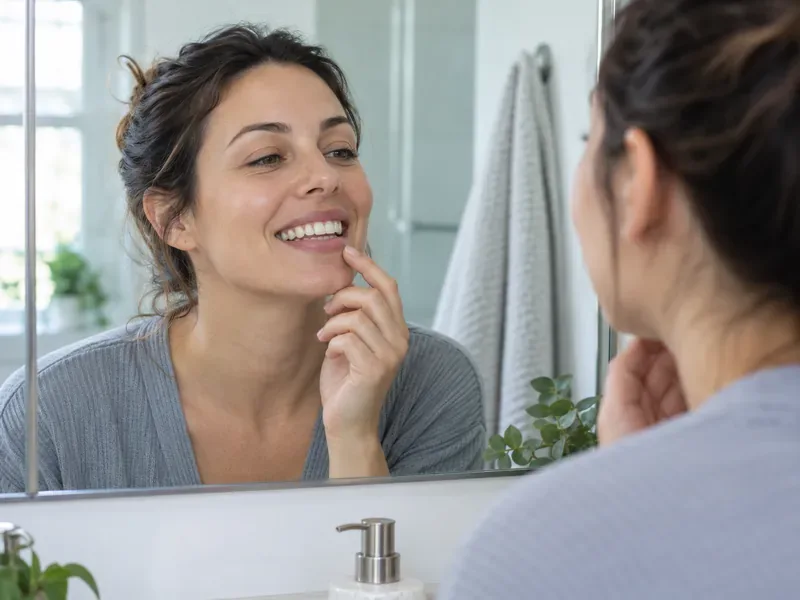
A small, fairly even shift across several natural teeth after a whitening session is more consistent with a change in overall appearance than a sharply defined new mark. Color also looks different under warm bathroom bulbs, cool daylight, a phone flash, or a camera’s automatic exposure. Lip color, surrounding tooth shade, and wetness can change the contrast your eyes notice.
Whitening can also have limits that are unrelated to sensitivity. Tooth-colored crowns, veneers, fillings, and implants do not lighten like natural enamel, so a shade difference may become more noticeable after surrounding teeth change. Some deeper intrinsic discoloration responds less predictably to external whitening. The ADA notes that examination before bleaching helps identify possible causes of discoloration and that restoration materials generally do not change color.
Arrange a dental assessment if one tooth becomes noticeably darker than the others, if the color change is localized or keeps progressing, or if it began after a blow, crack, or dental procedure. These patterns have several possible explanations; appearance alone cannot identify the cause. An exam, and sometimes imaging or other tests, is needed to decide whether whitening is appropriate. The ADA’s discussion of single-tooth discoloration describes why clinicians evaluate the cause before selecting treatment.
Seek prompt dental advice for severe or persistent tooth pain, pain that is not settling, a growing gum or facial swelling, or a damaged tooth. Get emergency help if swelling makes it hard to breathe. These symptoms are not expected measures of whitening success. NHS guidance lists severe or persistent dental pain, injury, and increasing swelling among reasons to seek urgent dental care; its advice on emergency access is specific to the United Kingdom, so use the local urgent dental service where you live. Read the NHS urgent dental guidance.
If the only change is that several teeth look slightly less bright after the initial treatment and sensitivity has faded, give the shade time to settle and assess it under consistent conditions. If the result remains bothersome, ask your dentist to compare the shade and review your method before restarting. Do not extend wear time, combine products, or repeat courses sooner than directed. More bleaching is not a reliable fix for a crown mismatch, a new single-tooth discoloration, or an underlying dental problem.
A practical goal is a stable, comfortable improvement across the natural teeth you intended to whiten, without gum irritation or a need to keep escalating treatment. Shade may vary among teeth, and whitening cannot promise a uniform bright-white result. A dentist can help determine whether a modestly darker settled shade is expected, whether staining needs a different approach, or whether a tooth should be examined before any further whitening.
This article provides general information, not a diagnosis. A mirror, photograph, or fading sensitivity cannot establish the cause of a color change.
Teeth may look darker after whitening as they rehydrate. Learn what changes are common, how to judge shade fairly, and when a dentist should assess it.
Doctor Truong My Linh's article answers questions about the effects of braces and information related to braces procedures.
What should people with braces eat? Some issues to keep in mind when choosing food? Find out with doctor Kim Thach Thanh Truc through the following article