Why a Tooth Can Hurt When You Bite but Not With Hot or Cold
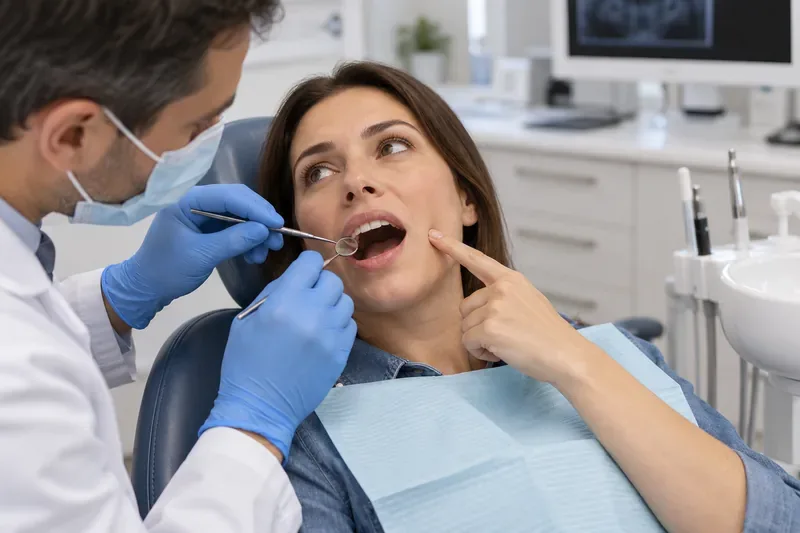
One tooth hurts when you bite, but hot and cold drinks feel fine? Learn possible causes, when to see a dentist, and which symptoms need urgent care.
A tooth that hurts only when you bite can still need a dental exam, even if cold water and hot drinks do not bother it. A crack, a cavity, a loose or damaged filling, or irritation inside or around a tooth can cause pain with pressure. The absence of temperature sensitivity does not identify the cause or prove that the tooth is healthy. A dentist needs to examine it to tell what is happening.
If the pain is sharp, keeps returning, or has lasted more than a day or two, contact a dentist promptly and avoid chewing on that side while you wait. Get urgent care for facial or gum swelling, fever, or a bad taste with worsening pain. Trouble breathing, swallowing, or speaking because of mouth or neck swelling is an emergency.
Biting puts pressure on the tooth and the tissues around its root. A damaged spot may hurt under that force even when temperature changes do not trigger pain. Symptoms vary: a cracked tooth can cause intermittent pain while chewing, sometimes as pressure is released, and it may or may not cause sensitivity to temperature extremes. Dental decay, a loose filling, or damage to the soft tissue inside the tooth can also cause sharp pain when biting.
Hot and cold sensitivity is only one clue. The American Association of Endodontists (AAE) notes that tooth pain can come from decay, a crack, or infection, and that cracks can be difficult to locate because symptoms may come and go. No single symptom, including a normal response to a drink, can confirm or rule out a particular problem.
A crack may flex slightly when the tooth bears down on food. That movement can irritate the inner tissue. Some people notice pain on biting or when releasing the bite; others have symptoms that are hard to reproduce. A visible chip is not required for a crack to be present. Avoid repeatedly biting on a hard object to test the tooth: that can aggravate a damaged area and cannot tell you how deep a crack goes.
Decay or a filling that has loosened or broken can make a tooth sore under pressure. If the problem began soon after a filling or crown, mention the timing to your dentist. A new filling that interferes with the way the teeth meet can cause pain when biting; a dentist can check the bite and decide whether an adjustment or another evaluation is needed. Do not try to file or reshape a filling yourself.
Pain when chewing can also occur when the pulp—the soft tissue inside the tooth that contains nerves and blood vessels—or the tissues around the root are inflamed or infected. Swelling, a gum bump, a persistent throbbing ache, fever, or a bad taste may increase concern and should prompt quick dental advice. These signs are not a diagnosis, and their absence does not guarantee that no dental problem is present.
Call your dental office promptly if one tooth repeatedly hurts when you bite, the pain is getting worse, or it does not settle. Tell the office whether the pain happens as you press down or release, when it began, whether there was a recent filling or injury, and whether you have swelling, fever, a bad taste, or pain at rest. If the tooth is broken or the pain is severe, ask for urgent guidance rather than waiting for a routine cleaning.
NHS guidance advises a dental appointment for toothache lasting more than two days, pain when biting, fever, red gums, a bad taste, or cheek or jaw swelling. For a U.S. reader, the practical point is to contact a dentist rather than waiting for hot or cold sensitivity to appear. A dentist may examine the tooth and nearby gum, check the bite, and use tests or imaging as appropriate. The exact evaluation depends on what they find.
Seek emergency medical care now if swelling in the mouth or neck makes it difficult to breathe, swallow, or speak, or if swelling reaches the area around the eye or neck. Call 911 in the United States (or your local emergency number) for breathing or swallowing difficulty. Facial swelling, fever, or rapidly worsening pain also warrants urgent same-day dental advice, even if breathing is normal.
Do not wait for a routine appointment if you have a significant dental injury, a rapidly enlarging swelling, or feel seriously ill. A dental abscess can involve infection around a tooth root; only a clinician can assess whether that or another condition is present.
The NHS also recommends avoiding chewing with the sore tooth and choosing soft foods while waiting. The AAE cautions against placing aspirin or topical oral pain products directly on a suspected cracked tooth. These steps may reduce irritation, but they are temporary measures.
Be as specific as you can without trying to name the condition. Note whether the pain occurs with every bite or only certain foods, whether it is sharper on release, whether the tooth recently had dental work, and whether the pain is spontaneous or only pressure-related. Mention any injury, clenching or grinding, swelling, fever, gum changes, or medicines you have taken for pain.
If you cannot tell which tooth hurts, that is useful information too. Cracked-tooth symptoms can be intermittent and difficult to localize. A dentist can use the history and examination together; guessing based on one sensation can lead to unnecessary worry or delay.
Pain limited to biting is a reason to arrange dental evaluation, not a reason to assume the tooth is cracked or to assume it is fine because temperature does not hurt. Several problems can produce a similar pattern, and some need treatment before they worsen. Avoid stressing the tooth, watch for swelling or systemic symptoms, and let a dentist determine the cause.
Sources checked September 30, 2026: American Association of Endodontists: Cracked Teeth; American Association of Endodontists: Tooth Pain; NHS: Toothache; Cleveland Clinic: Dental Fillings. This article is general information and does not diagnose the cause of an individual toothache.
One tooth hurts when you bite, but hot and cold drinks feel fine? Learn possible causes, when to see a dentist, and which symptoms need urgent care.
Doctor Truong My Linh's article about gargling with salt water with surprisingly effective benefits. So in what cases is salt water effective?