Ketotifen eye drops are used to relieve itching caused by allergic conjunctivitis, often called allergic pinkeye. The medicine is an antihistamine: it blocks histamine, a chemical involved in allergy symptoms. Some eye-drop products also help reduce the release of substances that contribute to allergic reactions. Ketotifen is intended for allergy-related eye itching; it does not treat every cause of a red, painful, or irritated eye.
What ketotifen is used for
In the United States, current over-the-counter ketotifen ophthalmic labels describe temporary relief of itchy eyes caused by pollen, ragweed, grass, animal hair, and dander. Ophthalmic means the product is made for use in the eye. Ketotifen may calm itching when an allergen triggers the surface of the eye, but it will not remove the allergen or cure an eye infection.
Allergic conjunctivitis often affects both eyes and may come with watery eyes, redness, or swollen lids. Similar symptoms can have other causes, including infection, dry eye, a foreign body, or an injury. Thick discharge, marked pain, light sensitivity, or a sudden change in vision should not be assumed to be an allergy. An eye-care professional can help identify the cause when symptoms are unusual or persistent.
How to use ketotifen eye drops
Read the package directions for your exact product. One current U.S. OTC label directs adults and children aged 3 years and older to place one drop in each affected eye twice daily, 8 to 12 hours apart, with no more than two doses per day. For a child younger than 3, ask a doctor. Prescription products and labels in other countries may differ, so follow the directions supplied with your medicine and your clinician’s instructions.
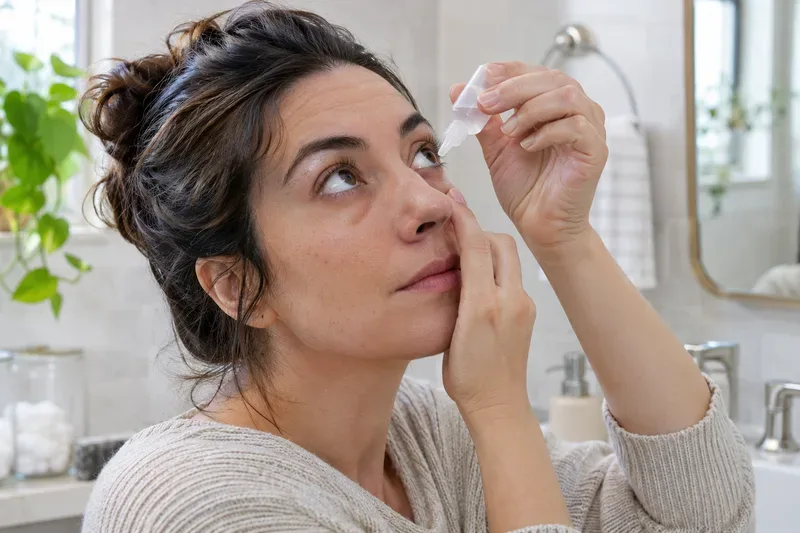
Good technique helps the drop reach the eye and reduces contamination risk:
- Wash and dry your hands. Check that the bottle and dropper tip are clean and undamaged.
- Tilt your head back and gently pull down the lower eyelid to make a small pocket.
- Hold the bottle above the pocket without letting the tip touch your eye, eyelid, fingers, or any surface. Squeeze in one drop.
- Close the eye gently for a few minutes. If comfortable, press lightly at the inner corner near the nose to limit drainage. Wipe away excess liquid and replace the cap.
If you use another eye medicine, ask a pharmacist or clinician how far apart to use the products. If a dose is missed, follow your product instructions; do not double the next dose. Never share eye drops.
Contact lenses and product precautions
Many ketotifen drops contain benzalkonium chloride, a preservative that can be absorbed by soft contact lenses. Remove lenses before applying the drops and wait at least 10 minutes before putting them back in, if your product label gives that instruction. Do not use these drops to treat irritation caused by contact lenses. Avoid wearing lenses while the eye is red, and follow advice from an eye-care professional.
Do not use a bottle if its solution has changed color or become cloudy, if you know you are sensitive to an ingredient, or if the seal is broken when the product requires an intact seal. Keep the dropper tip away from surfaces and close the bottle after each use. Store the medicine as directed on its label and keep it out of children’s reach. Eye drops are for the eye only; if swallowed, seek urgent poison advice.
Side effects and when to get help
Temporary stinging or burning, dry eyes, headache, runny nose, or blurred vision may occur. Do not drive or operate machinery until any blurred vision clears. Contact a health professional if a side effect is severe, persistent, or concerning.
Stop using the OTC product and ask a doctor if you develop eye pain, a change in vision, or eye redness, or if itching worsens or continues beyond 72 hours. Seek urgent assessment for sudden vision loss, severe pain, significant light sensitivity, an eye injury, or rapidly worsening symptoms. Those signs may point to a problem that allergy drops cannot address.
Why symptoms may not improve
Several explanations are possible. The trigger may still be present, such as pollen or pet dander; the symptoms may have a non-allergic cause; the medicine may not have been applied correctly; or the selected product may not suit the person. These are possibilities, not a diagnosis. Check the dosing interval and dropper technique, avoid rubbing the eyes, and reduce contact with a suspected allergen when practical. Do not increase the dose or continue beyond label guidance to force a result.
If symptoms persist, recur frequently, or affect only one eye, arrange medical advice rather than repeatedly self-treating. A clinician can check for infection or another eye condition and discuss alternatives. People who are pregnant, breastfeeding, taking other medicines, or treating a young child should ask a healthcare professional whether the specific product is appropriate.
Sources and current-label note
The dosage, age threshold, contact-lens timing, and stop-use warnings above reflect the DailyMed U.S. OTC ketotifen fumarate ophthalmic label updated March 18, 2026. The application steps and general medication-use guidance are informed by MedlinePlus’ Ketotifen Ophthalmic guide, last revised May 15, 2016. These sources describe product information and patient instructions, not a newly reported medical event; no separate new clinical development was identified in this search.